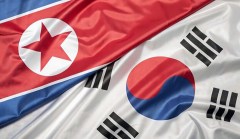

My Twitter thread of Dec. 28, 2019:
The American public should not be under the impression that our problems with North Korea are solely related to its nuclear and missile programs, which indeed threaten not only South Korea and Japan, but the U.S. mainland. As vital as these issues are to resolve after 30 years of their emergence, for the North, they are ultimately tools to achieve survival, security and independence from the interference of its bigger neighbors — an age-old story in the history of Korea.
Korea’s experience is of being repeatedly thrown under the bus by the surrounding major powers from the beginning of the 20th century. This includes China, Russia, Japan — and the United States, which conveniently looked the other way as Japan began to colonize Korea in 1905 while America acquired free rein in its newly-acquired Philippines.
North Korea’s development of threatening military capabilities should be seen in the context of its fundamental fear of being ignored, neglected, even subjugated, by a larger “imperialistic” or major power. This has been the historical experience of the Korean Peninsula for the last 120 years, the problem of being “a shrimp among whales.” For North Korea on a peninsula divided since 1945, its only hope of survival is to gain the world’s attention for all the wrong reasons rather than appear to be what it really is: fundamentally a weak country with limited integration into the world economy that can conveniently be ignored.
Trump’s three meetings with Kim, though they built a modicum of personal trust at the leadership level, have not been matched by detailed progress on the working level that would curtail or end the North’s nuclear program and missile development in exchange for sanctions relief and other tangible benefits. The State Department has nowhere matched the degree of effort and investment at the bureaucratic level in negotiating with the DPRK seen under both the Clinton and George W. Bush administrations.
American distrust of North Korea has been profoundly deep, pervasive and long-lasting, stemming from the bitter experiences of the Korean War of 1950-53. And the North often perceives American negotiating tactics to be tantamount to asking it to strip naked and reveal its defense secrets and capabilities in exchange for the dangling of unspecified potential benefits down the road.
This administration, like its predecessors, fails to appreciate the North’s need to permanently improve relations with the United States so that its newfound relationship with America counterbalances the growing pressure from a rising China that projects itself as East Asia’s hegemon. North Korea is trying to survive and maintain its independence, possibly by also coming to accommodations with South Korea, in a regional environment where China has unprecedented leverage.
North Korea, sharing an 800-mile border with China, fears potential Finlandization by its larger neighbor, where the Kim family is allowed to rule domestically in the North but only within the confines permitted by China (and aligned with China’s foreign policy), where the North Korean economy essentially is integrated into that of northeast China, and the Chinese yuan becomes the dominant if not official currency in the North. For China, a subservient North Korea is the best guarantee to prevent invasions that in its long history often came over the Korean land bridge from Japan.

Xi Jinping and Kim Jong Un in Pyongyang in June 2019.
But how much has changed in 2020 compared to the early 1990s? Less than we may think. North Korea remains caught in the same larger predicament as described. To the DPRK, U.S. presidents come and go, because North Korea looks at the United States as a geopolitical entity whose interests are permanent and maintains policy continuity over the years.
The United States must look more comprehensively at the situation on the Korean peninsula, understanding that North Korea requires a reliable and strong relationship with the United States to deter Chinese penetration and co-opting of its political society and economy, and that the nuclear issue can be resolved slowly but in a step-by-step manner to the eventual satisfaction of the United States and the international community. It is also in America’s interest not only to sign a peace declaration declaring the end of the Korean War but to negotiate a formal peace treaty that ends the Armistice Agreement in effect since July 1953.
The North Korea problem will be solved when America takes seriously the North’s strategic circumstances in its broad historical and geopolitical context. When it seriously considers the more fundamental issues of history and regional balance of power, the U.S. will be able to make a lasting contribution towards Northeast Asia’s peace and stability. That should be President Trump’s goal in deciding how to proceed with North Korea from now on.♦
At top: Kim Jong Un and Xi Jinping talk in May 2018 in Dalian, China.
For an excellent Twitter thread unroll (also on Dec. 28) by Dr. Artyom Lukin on North Korea’s economic dependence on China, which could greatly reduce its political independence and eventually put DPRK sovereignty at risk, see here.
 Mark P. Barry's Blog