
I was interviewed today on Arirang News’ 8 a.m. newscast, “New Day,” about Kim Jong Un’s Oct. 10 speech on the 76th anniversary of the Worker’s Party of Korea. Many thanks to co-anchors Mark Broome and Kim Mokyeon:
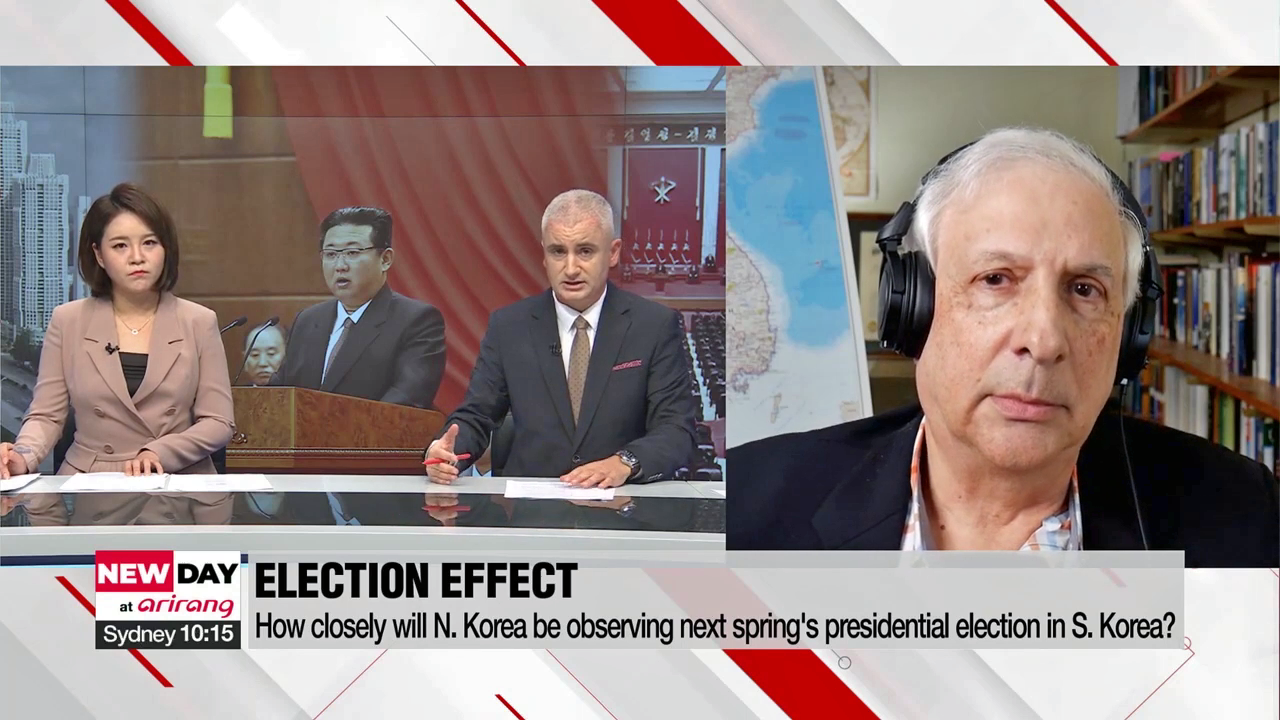
Below is an outline of the four questions asked and my abbreviated answers:
Q: Some experts are viewing Kim’s remarks as an attempt to shore up internal unity as the North’s economic woes become increasingly more dire — and that’s not to mention the negative effects of the pandemic and numerous natural disasters. That’s their take, but how do you interpret Kim’s remarks?
A: The socialist model of economic mobilization, well-known from the first five-year plans of the Soviet Union, demonstrated throughout World War II and during the post-war reconstruction of the economy, is highly effective. It’s also the 10th anniversary of Kim’s assumption to power so relying on a five-year plan is a hallmark of a Stalinist-style of leadership.
Q: Speeches full of nationalistic sentiment and “we are all in this together” are nothing new when it comes to North Korea, but is there anything to suggest Kim and the regime’s elite are genuinely worried that things could get so bad that there could be either an internal challenge to his power or even a popular uprising?
A: These mobilization campaigns also expose those who disagree and they get purged, so internal challenge not likely. NK’s biggest fear in fact is ongoing Chinese pressure to conform its foreign and defense policies to those of China and pressure to slowly integrate the DPRK economy into that of China’s Northeast, leading to a progressive loss of sovereignty. That for NK is an existential threat.
Q: The North has been softening its tone toward the South in recent weeks. However, President Moon Jae-in’s term effectively ends in five months. How might the North’s attitude shift toward Seoul should the more hawkish People Power Party take over the levers of power in South Korea in March 2022?
A: North Korea knows that a conservative SK government will at best pay lip service to inter-Korean relations but in fact urge the U.S. not to engage the North, which will make NK unable to balance Chinese pressure and thus create an existential crisis for it. That’s why this is a very crucial election for NK.
Q: Finally, President Biden has been in the White House for just over nine months now. Despite his administration’s efforts, the North has repeatedly rebuffed U.S. calls for talks. How do you assess the Biden administration’s diplomatic outreach toward North Korea to this point?
A: There appears no U.S. desire to tackle the NK issue seriously at all; that’s why it appointed Amb. Sung Kim only as P/T working on NK, otherwise he remains ambassador to Indonesia, and why at a recent ASEAN meeting Secretary Blinken urged greater cooperation on DPRK sanctions. Biden seems less interested in a Korean peace solution than he is in a modicum of a two-state solution between Israel and the Palestinians.♦
 Mark P. Barry's Blog