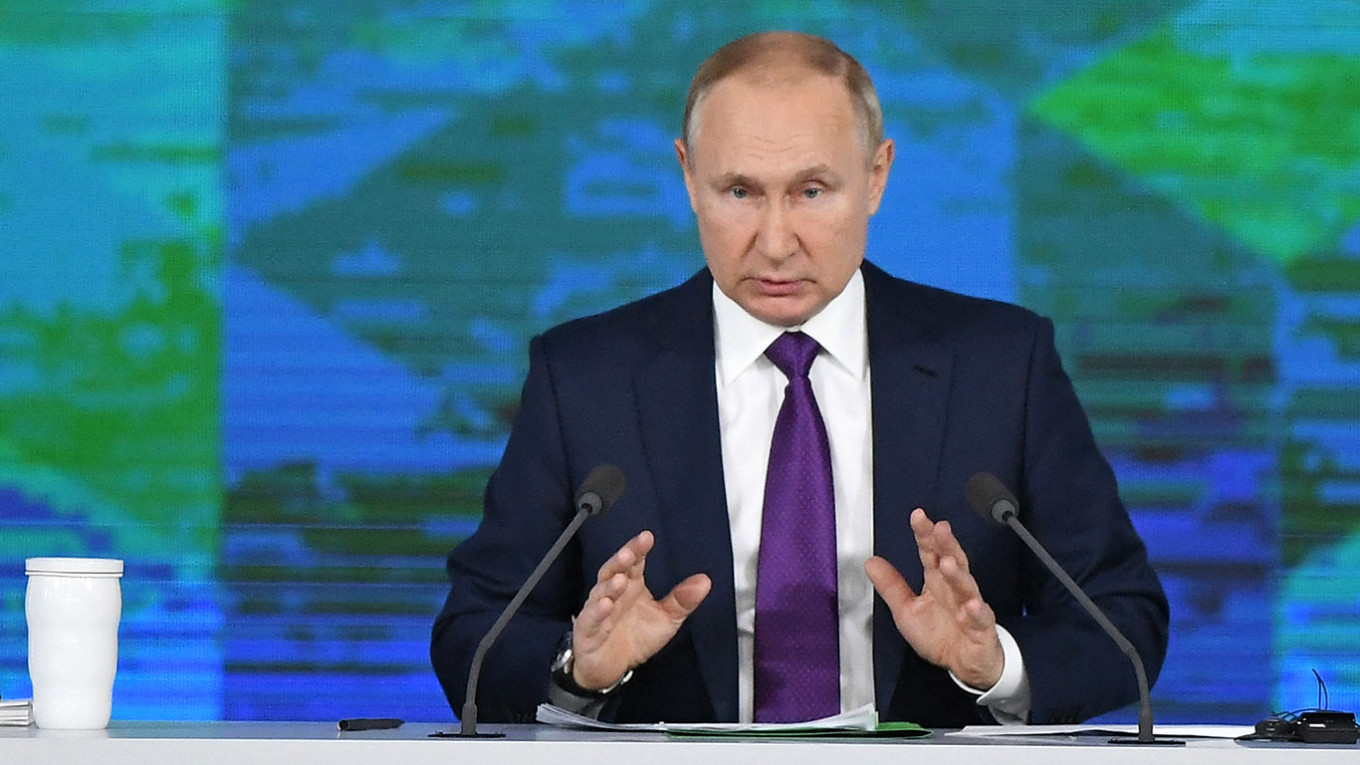
I was among three experts interviewed on the Canadian Broadcasting Corporation’s “The National” nightly newscast to discuss today’s Biden-Putin phone call. Many thanks to Travis Dhanraj, Senior Parliamentary Reporter, CBC News, for the opportunity.
Arirang News suddenly asked me to comment today on recent U.S. and NATO tensions with Russia over Ukraine. It afforded me the opportunity to comment on ill-advised U.S. and NATO policy toward Russia since the demise of the Soviet Union on Christmas Day 1991.
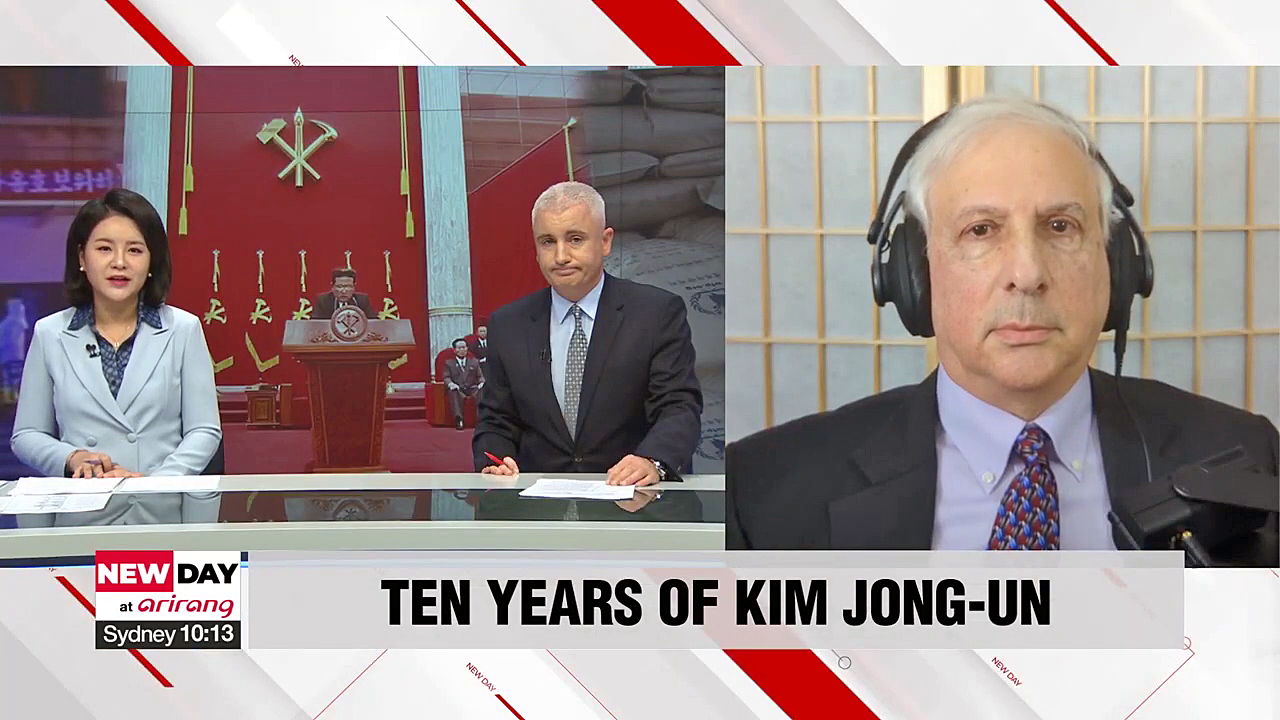
Again, many thanks to Mark Broome and Kim Mok-yeon for inviting me on their “New Day” program on a topic that did not directly affect Korea, yet at the end, I was able to make a point about a potentially constructive role Russia may play in the future of the peninsula. The full interview, which has received a large number of YouTube views, is below:
I was again interviewed yesterday on Arirang News’ “On Point” segment on its 8 am morning program, “New Day.” Many thanks to co-anchors Mark Broome and Kim Mok-yeon for their questions. Here’s the video:
And here is the gist of the interview:
Q: Why do you think Russia and China are pushing for the removal of sanctions on North Korea? Considering the other members — the U.S., the UK and France — would never agree and all have veto-wielding power, what’s the real motive behind Beijing and Moscow making this move — that’s doomed to fail — at this current time?
A: Russia and China have been consistent over the last 30 years that the North Korean nuclear issue must be settled without confrontation. They insist that NK has legitimate interests that must be respected, and that the Kim regime should be treated as a partner for peace and not as an adversary. In hindsight, Russia and China are probably more right than wrong, and as both countries border on NK, they don’t want to see regional instability in NE Asia. BTW, of the three UNSC P5 you mentioned, the UK has diplomatic relations with NK, but on the nuclear issue they follow US policy because nonproliferation alone has taken on a higher value than resolving a state of war that has persisted since 1953.
Q: In your view, how important is it that the international community maintains sufficient economic leverage over the North through sanctions to ensure the regime fulfills its denuclearization commitments? And would you support making the sanctions even tougher to try and force the North’s hand?
A: Bilateral and UN sanctions on NK are maintained because, in the end, the US has relied on military power and pressure rather than astute diplomacy since the collapse of the Soviet Union 30 years ago. Classic diplomacy in conflict resolution is now a rarity. Sanctions are a bargaining chip the US uses with NK, but there are three realities about sanctions on NK: The US doesn’t adequately enforce its own sanctions; China pays little heed to UN sanctions (except for in 2017); and NK has found a multitude of ways to skirt sanctions. Ironically, the DPRK is not the most sanctioned nation, but Iran is, followed by Russia. Moreover, NK has harmed itself far more with its ironclad COVID lockdown than it has been hurt by sanctions.
Q: Ten years ago, at the age of 27, Kim Jong-un was the North’s so-called “Great Successor.” Fast-forward to 2021 and the regime is in crisis — arguably poorer and even more isolated than when he took power. How do you assess Kim’s decade as North Korean leader?
A: I knew three Korean-Americans who attended Kim Jong Il’s funeral on Dec. 28, 2011. They each personally expressed their condolences to Kim Jong Un, and I later got to see their photos of him. Kim looked absolutely devastated, not only at the death of his father, but at the sudden burden thrust upon him at age 27. Many doubted he’d make it beyond the first year or two, because successions are a fragile time for regimes dependent on a single, absolute leader. Kim did what he thought he had to do to consolidate power. And none of the other leaders who accompanied the hearse at his father’s funeral are alive or in power as of today. For the economy, Kim probably did more than he’s given credit for, and he undertook bold initiatives with both President Moon and Trump. But still Kim is surrounded by familiar problems.
Q: Some experts say Kim is facing his toughest moment as leader yet – crushing sanctions, the pandemic, food shortages and growing economic trouble all converging. Do you think Kim and his top aides recognize something has to change — and fast — to ensure he remains in such a powerful position in another 10 years from now?
A: That’s the existential question for Kim: Will the next ten years be no better — or worse — than the first ten? My hunch is, after the next ROK president takes office, Kim will try to arrive at some kind of an accommodation with South Korea because his only other choice may be a de facto Finlandization by China in which China greatly invests in the North’s economy but at the expense of NK’s full independence and sovereignty. Kim will never accede to that. By accommodating with the South, he gains both political leverage against China and substantial economic support from SK. If that occurs, the best US response would be diplomatic recognition of NK after a tacit understanding about the disposition of the North’s nuclear weapons program.♦

 Mark P. Barry's Blog