
Transcript of the main question asked of me (at 18:08 in the interview):
Photo at top: President-elect Trump speaks during a news conference at Mar-a-Lago on Jan. 7, 2025, the day after his election was certified by Congress.
Transcript of the main question asked of me (at 18:08 in the interview):
Photo at top: President-elect Trump speaks during a news conference at Mar-a-Lago on Jan. 7, 2025, the day after his election was certified by Congress.
Full 15-post thread unroll via Skyview, summarizing the political analyses of Saturday’s major South Korean newspapers, here.♦
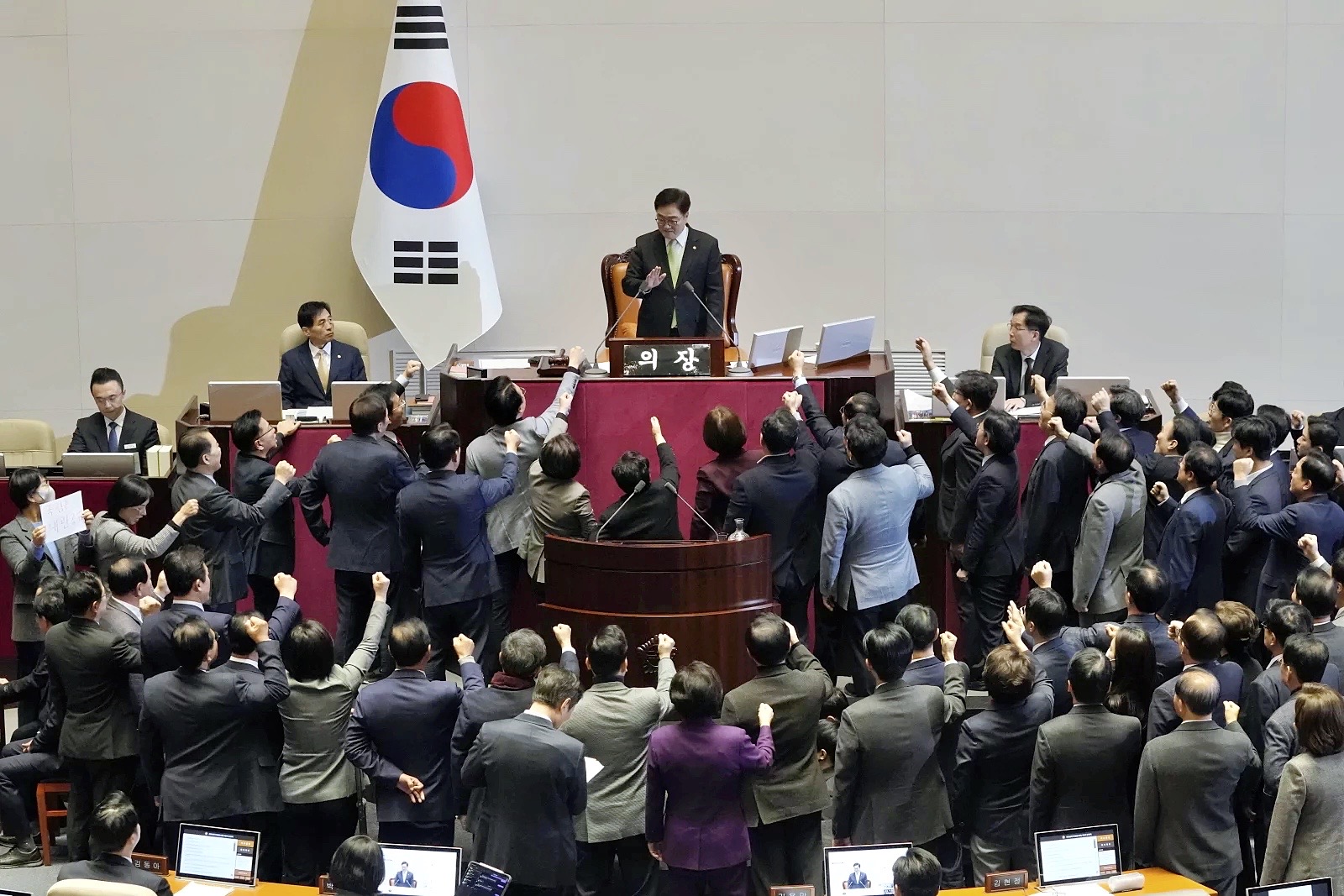
Photo at top: Lawmakers of the ruling People Power Party protest to South Korea’s National Assembly Speaker Woo Won Shik, above, during a plenary session for the impeachment motion against South Korean acting President Han Duck-soo at the National Assembly in Seoul, South Korea, Dec. 27, 2024.
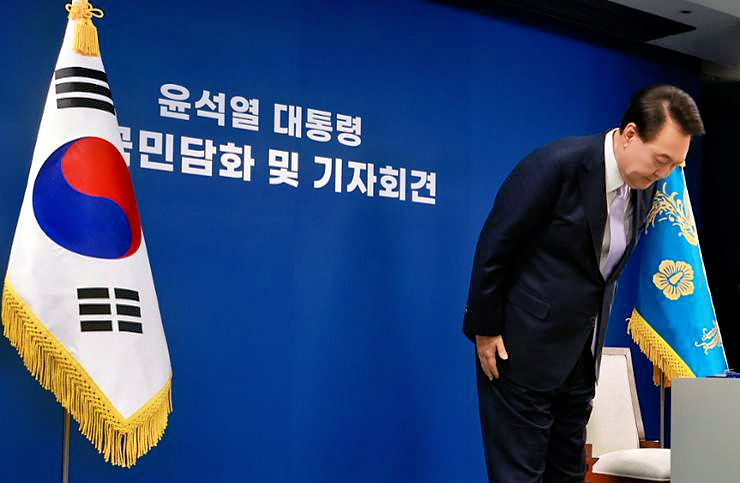
Photo at top: President Yoon Suk Yeol bows in apology to the South Korean public during a press conference at the presidential office in Seoul on Dec. 7.
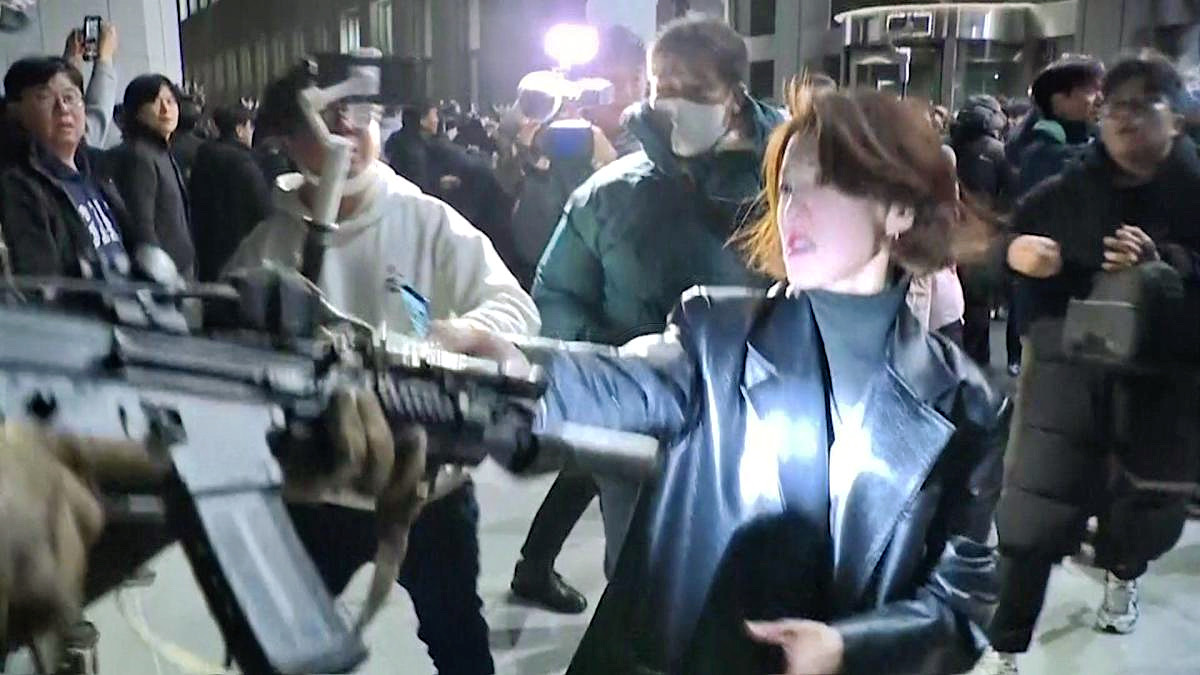
This photo (and video) of Ahn Gwi-ryeong, 35, a spokesperson for South Korea’s opposition Democratic Party, grabbing the weapon of a soldier outside South Korea’s National Assembly building after the Dec. 3 declaration of martial law, has been shared widely online. BBC story here.
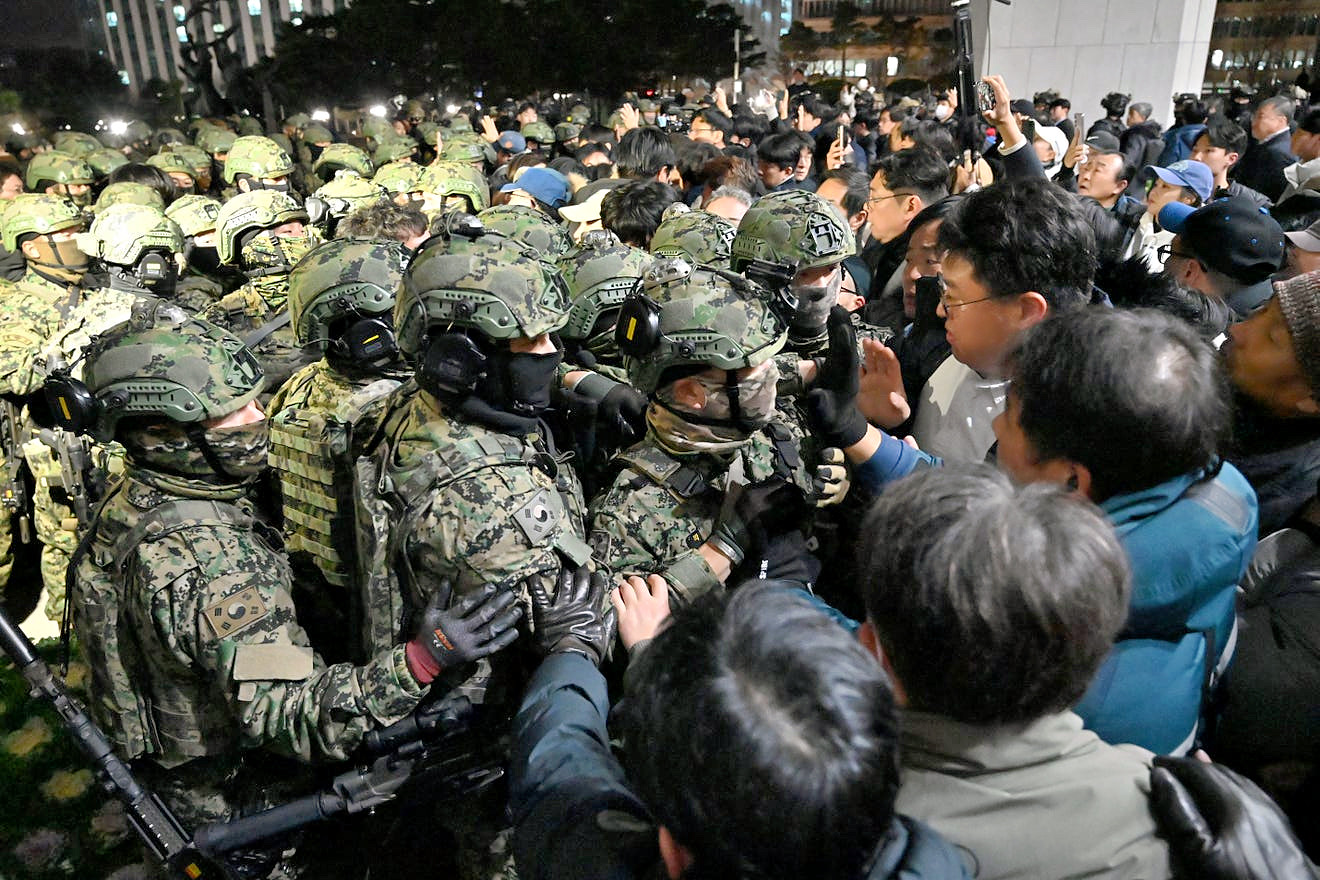
Photo at top: Soldiers try to enter the National Assembly building in Seoul on December 4, 2024, after South Korea President Yoon Suk Yeol declared martial law at 10:25 pm KT on Dec. 3.
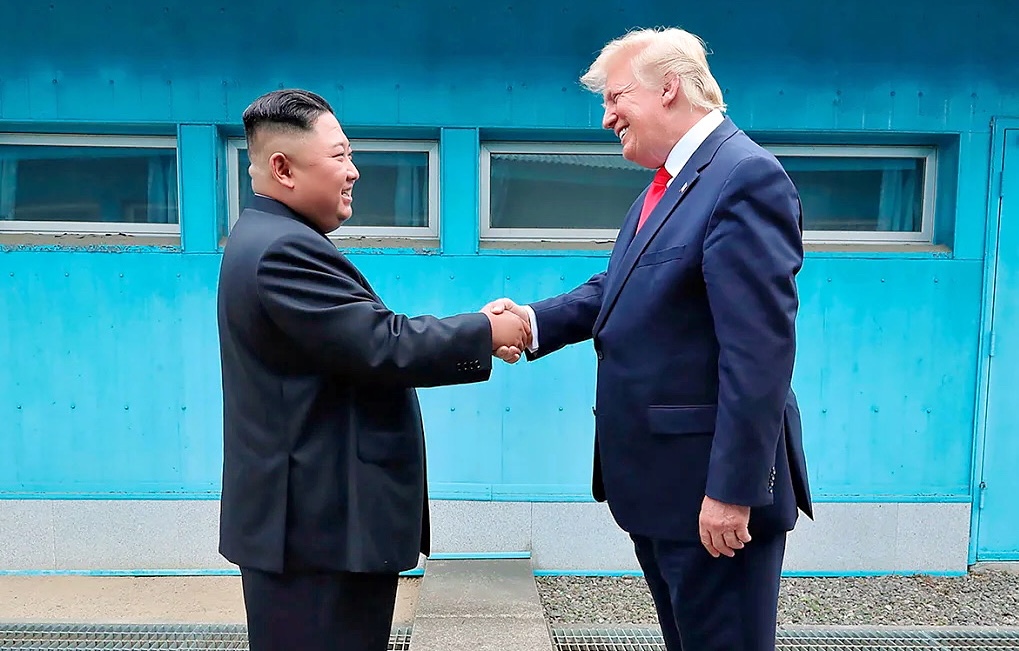
Photo at top: Kim Jong Un meets President Trump at the MDL in Panmunjeom on June 30, 2019.
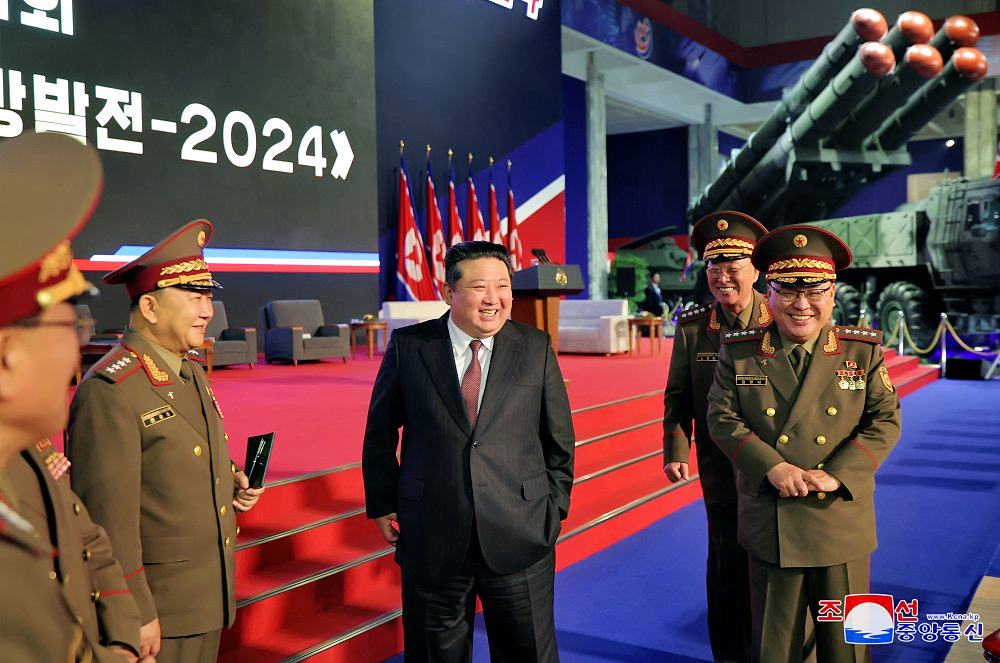
On November 21, I was a guest, along with Dr. Kim Young-jun, Professor at the National Security College, Korea National Defense University, on Arirang News’ “Within the Frame” public affairs program to discuss North Korea, Russia, and Ukraine after Ukraine’s expanded use of U.S.-made ATACMS missiles. We also discussed Kim Jong Un’s recent speech to KPA battalion commanders in which he expressed fear of a “third world war.” Many thanks to host Kim Mok-yeon for her questions.
Here is the video:
Photo at top: Kim Jong Un attended a military hardware exhibition, Defence Development-2024, in Pyongyang on Nov. 21.
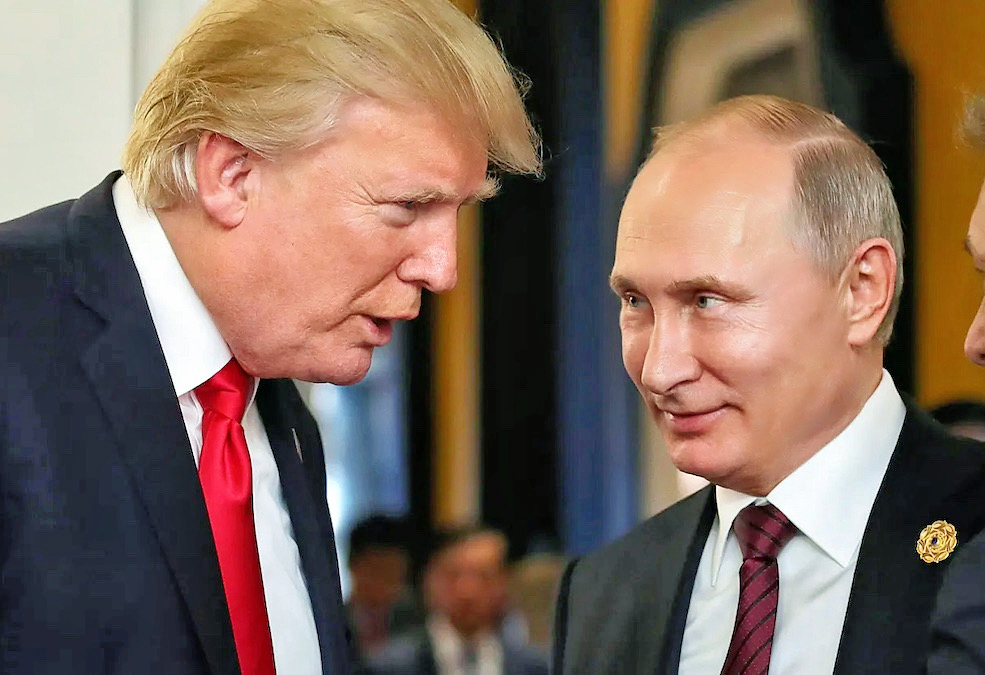
On October 30, I was a guest, along with Dr. Go Myong-hyun, Senior Research Fellow at the Institute for National Security Strategy, on Arirang News’ “Within the Frame” public affairs program to discuss North Korea and Ukraine. Many thanks to host Kim Mok-yeon for her questions. Here is the video:👇🏻
I was also a guest on Oct. 28 on BeFM radio’s flagship “Morning Wave in Busan” program, interviewed by host Katherine Bang on the same topic. I thank her for allowing a very broad discussion.
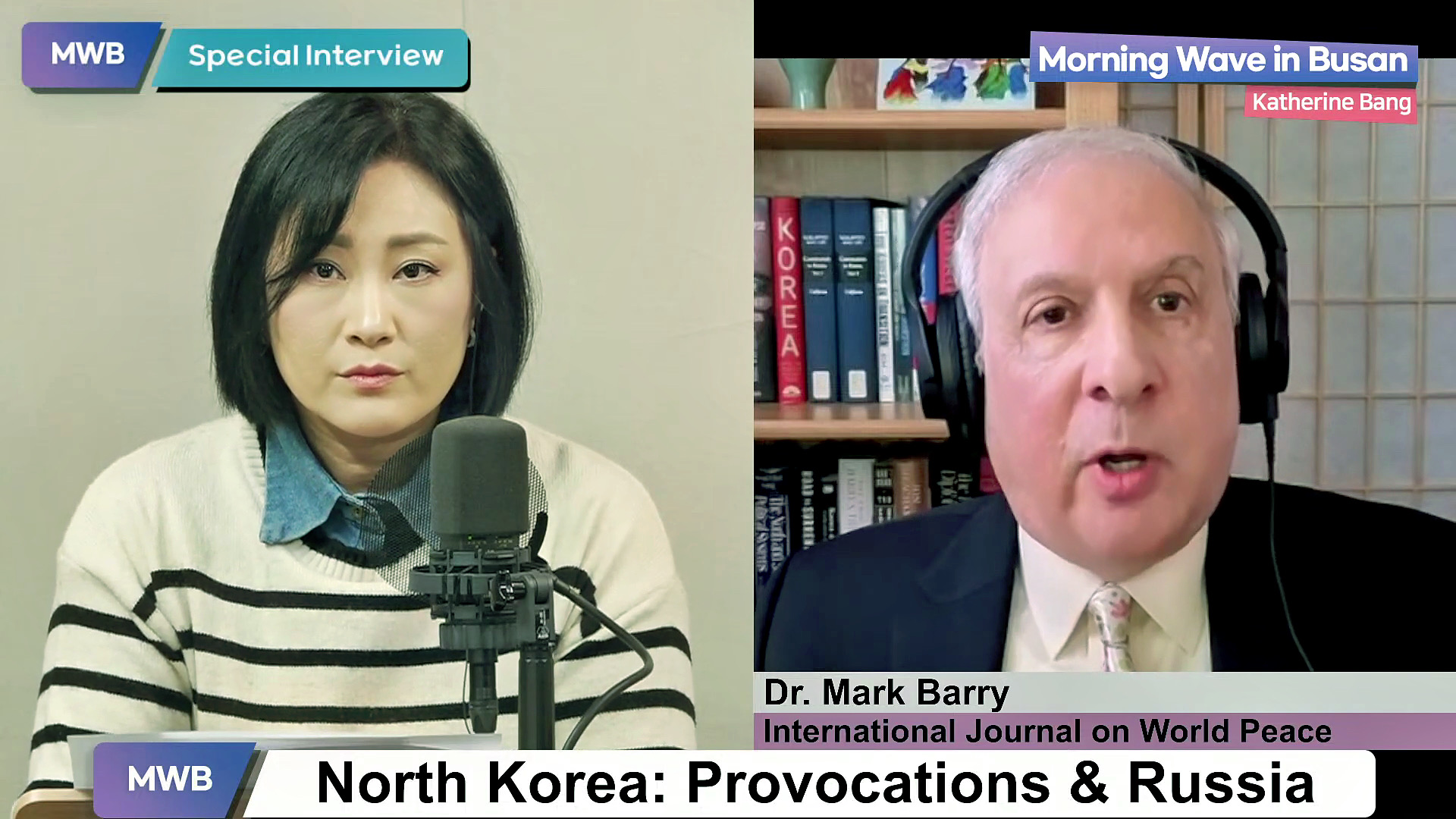
Here is the video segment:👇🏻
In both interviews, I tried to convey that, absent an incontestable landslide victory on Election Day for Kamala Harris, Donald Trump will simply declare himself President-elect up-front, well before all votes are counted (which may take days or weeks), asserting he has the emphatic backing of the American people, and he may imply he is the “Acting President” who must now, in effect, run the country because President Biden, allegedly, is no longer capable to (despite the upcoming APEC and G20 summits this month he’s expected to attend).
Trump may then begin to conduct a parallel foreign policy to that of the Biden/Harris administration from Trump Tower or Mar-a-Lago well before the final election outcome is known, with phone calls to Putin, Netanyahu and other world leaders. This possibility will severely test American democracy, in the midst of North Korean troop deployment in the Ukraine war. Trump is increasingly “psychologically preparing Americans for an assault on the electoral system, a second January 6,” even if he knows he’s lost.♦

I was interviewed last night for Arirang News’ “On Point” segment on its morning news program, “New Day,” and discussed North Korea’s demolition of its roads by the two rail lines to South Korea; the apparent flight of drones over Pyongyang; the failure of continuity in foreign policy over successive administrations in both the U.S. and South Korea; the DPRK alliance with Russia (including recent sending of North Korean troops to fight in the war against Ukraine); and the North’s fraught relations with China. None of this bodes well for North Korea’s future. Many thanks to anchor Kim Da Mi for her questions and the opportunity to speak at some length.
Below is the full interview:
And below is a lightly edited transcript:
“On Point” segment, New Day, 10 a.m. KST, Arirang News, Oct. 16, 2024
Host: Now, let’s delve deeper into North Korea’s intentions behind the latest display of anger. We’re joined by Dr. Mark P. Barry this morning. Welcome back.
Barry: Good morning. Happy to be back again.
Host: What does it mean to blow up roads along the Gyeongui and Donghae rail lines which connect to [South] Korea?
Barry: Roads are a means of goods being transported, and it means not even humanitarian supplies are going to be sent north in the future because the roads that were occasionally used are no longer connected.
So basically, it’s still symbolic, but it doesn’t distract North Korea from its other priorities, whether domestic or its alliance with Russia.
And as we know, the North already blew up the inter-Korean liaison office more than two years ago, and that railway links had begun dismantlement, I believe, last May.
But in my view, the ongoing leaflet balloons from the South have been a big cause of this because Kim believes they’ve been encouraged by the ROK government.
And although it’s unclear who sent the recent drones to Pyongyang, the evidence is that they originated from the South, whether they be from NGOs or the government or maybe a combination of the two.
But we should caution that Hamas for years was sending incendiary balloons over the fence in Gaza into Israel. And look where things are today. So this is a very, very dangerous tactic that’s going on.
Host: Well, Dr. Barry, let’s talk more about the symbolic significance the happening carries. Why is North Korea symbolically then destroying inter-Korean relations that have been slowly built up?
Barry: My view is that, and I keep emphasizing this over and over again, this reflects a lack of continuity in foreign policy in both the U.S. and in South Korea between successive administrations.
So just as Obama warned President-elect Trump in November 2016 that his biggest foreign policy headache was North Korea, President Trump should have conceded the [2020] election, believe it or not, and offered to connect President Biden to Kim. I mean, that’s what we used to call continuity in foreign policy.
And frankly, I think President Yoon would have been much better off to maintain even clandestine direct communication with Kim from 2022, because it would have showed his respect for Kim’s decision in 2018 to improve relations with South Korea. But that perceived lack of direct respect towards Kim has contributed to this problem.
Host: Well, Dr. Barry, you know, trash-carrying balloons, like you mentioned, drones carrying propaganda leaflets, and now blowing up roads. When will these provocation happenings actually stop? I mean, is there any chance all these will come to an end after the U.S. elections next month?
Barry: I think Kim is making permanent his cutting of ties with the South, and he’s doing it before the next [U.S.] president takes office. But there’s no guarantee we’re going to know the winner in the few days after the election. It took 36 days in the year 2000 between Gore and George W. Bush.
So in my view, it’s less a stunt than a declaration of a new status quo, and it makes it easier for North Korea to conduct its relations as its own, you might say, unique state.
And it’s communicating, in effect, that it’s lost the inter-Korean competition.
So its only choice is to cut off from the South and discard all notions of unification, even though that may not be what its populace actually feels.
And so the U.S. election outcome is going to have little influence on Kim right now, even if Trump were to win.
And that’s because, again, in my view, Kim is no longer fully free to act internationally because he’s in part beholden to Putin as Putin’s junior partner.
Host: Well, you know, Russia is backing North Korea’s persistent claim of drone incursions by South Korea, and Putin is submitting a bill to ratify Russia’s strategic agreement with the North. What is behind Pyongyang-Moscow deepening military ties right now?
Barry: The treaty that is being discussed in the Duma, which was in outline form agreed between Kim and Putin in June, Peskov, the spokesman for the Kremlin, says that the treaty is “unambiguous” on mutual defense, but frankly it’s subject to interpretation. And, it’s really up to Putin’s interpretation, because he’s the senior partner.
So job number one for Kim Jong-un right now is to not disappoint Putin and deliver the goods, whatever he asks for.
And that includes sending several thousand troops who, according to Ukrainian intelligence, [though] being Korean, are being dubbed “Buryats.” Buryatia is a Russian [republic] just north of Mongolia. They’re of Mongolian-related background. And so they’re basically calling the North Korean troops “Buryat” brigades.
So Kim is now Putin’s contractor, and at all costs he has to succeed where Putin expects him to. And if Kim fails Putin, he’s going to be thrown under the bus and abandoned.
And Putin may then leave it to President Xi to have his way with North Korea. And Xi will find ways to constrict Kim through dependence and subordinating North Korea’s economy and foreign policy to China’s needs.
So basically, I’d say Kim Jong-un, his back is to the wall.
Host: Well, we cannot not talk about China here. You know, Pyongyang-Beijing ties appear to be not as tight as Pyongyang-[Moscow] relations. Now, do you think China will remain quiet about the recent escalating tensions here on the Korean Peninsula?
Barry: It’s part of a larger picture of Chinese relations with the Russians.
And of course, the new Russian defense minister met with a senior Chinese military official, I believe just yesterday. They’re communicating on all sorts of security-related matters.
But for Kim Jong-un, he met President Xi five times, the last time in June 2019. But that’s over five years without face-to-face contact.
But Xi’s end goals are more for DPRK subordination, recognizing China’s superior status.
But from Kim’s point of view, he knows this means progressive loss of North Korean independence and sovereignty.
And that’s why he reached out to Putin last year, because Russia’s war in Ukraine, after about a year, was stalemated.
Since Kim could no longer pursue counterbalancing enormous Chinese pressure with ties to the U.S. under the newly-elected President Biden, this became his only option, to improve ties with Russia and do what Russia asks of him.
So this is likely Kim’s final effort to forestall what could be tragic consequences for the North in the not-too-distant future, where it could de facto lose its sovereignty and independence, although nominally be its own state.
Host: All right, Dr. Barry, thank you so much for joining us and also for sharing your insights with us this morning. We appreciate it.♦
Photo at top: Kim Jong Un attends what KCNA called a national defense and security council meeting on Oct. 14.
 Mark P. Barry's Blog