My early 2020 written interviews on North Korea

640

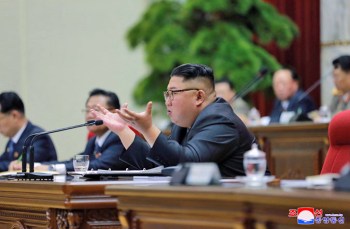
I am again quoted in the February 16, 2020 China Newsweek, this time on the appointment of Ri Son-Gwon as the new DPRK Foreign Minister:

Original Chinese:

​李善权:谈判“暴躁”的朝鲜新外相

English machine translation:

https://www.translatetheweb.com/?from=ab&to=en&a=https%3A%2F%2Fmp.weixin.qq.com%2Fs%2Fi9V31iuBcfRYHMpyWIC1ow

Many thanks again to writer Ran Cao for his detailed report. Here are my full comments as submitted by email on Jan. 31:

“Ri Son-gwon’s new role as FM in itself has little impact on U.S.-DPRK relations because he is unlikely to ever get personally involved in negotiations. Rather Madam Choe and her people will continue to manage the process, because Ri’s predecessor also did not get involved in this special aspect of DPRK foreign policy. Life-long Foreign Ministry professionals are important for North Korea because they are the only people trained to deal with their international counterparts in the manner of government-to-government relations. Ri’s appointment, as a military man and former righthand to Kim Yong Chol, could be a signal that North Korea intends to safeguard its nuclear program and not negotiate it away unless the U.S. were to remove its sanctions upon the North — a most unlikely scenario. Figures like Ri wear multiple hats: most have military ranks and occasionally wear uniforms, but they are primarily party people, since that remains Kim Jong Un’s base of power; the military and government are secondary to the party to him.

“We need to see prospects for U.S.-DPRK negotiations in 2020 with the new perspective of Trump’s assassination of Iran’s General Suleimani and offer of a non-starter peace deal to the Palestinians in January (seen as a plan that seeks their capitulation). Kim Jong Un, perhaps rightly so, may have already concluded that Trump will never make a deal where he appears to be weak or cave in, and that he is unpredictable. Trump also does one-shot deals, not interim deals; that’s his character. Therefore, despite the fact that Trump will survive impeachment and is likely to be reelected, the personal relationship with Kim, which is all that survives right now, is not a sufficient basis to move forward. Kim surely is saying to his generals that the only way the U.S. will respect North Korea is to retain a nuclear capability that will prevent unilateral action by the U.S.; it is the “great equalizer” for an otherwise weak country whose dependence on China is only increasing. After reelection, we will see what Trump will do, but right now, he seems capable only of either breaking deals or of imposing deals or conditions on those who are too weak to resist or object.”

Also, on January 21, I was one of 12 North Korean specialists surveyed by Radio Free Asia’s Korean Service on likely North Korean behavior towards the U.S. and South Korea in 2020. These were the 12 interviewed, in my case by Dukin Han:

1. Amb. Robert King
2. Thomas Countryman
3. Harry Kazianis
4. Mark Tokola
5. Frank Aum
6. David Maxwell
7. Ken Gause
8. Bruce Bennett
9. Andrei Lankov
10. Mark P. Barry
11. Kyle Ferrier
12. Henri Feron

Original Korean:

[북 다음 행보 긴급설문] 미 전문가들 “저강도 도발 이어질 듯”

English machine translation:

https://www.translatetheweb.com/?from=ab&to=en&a=https%3A%2F%2Fwww.rfa.org%2Fkorean%2Fin_focus%2Fnews_indepth%2Fne-jn-01212020150247.html

Although I was not quoted in the posted article above, some of my comments were later included in a RFA Korean radio broadcast about the survey which was not posted online. Here are my full comments as submitted by email in mid-January (pre-coronavirus):

“The fact that President Trump conveyed birthday greetings, through the visiting ROK National Security Advisor, to Kim Jong Un in early January indicates that the core relationship still exists, which both sides don’t wish to break. U.S.-DPRK negotiations cannot begin until Trump’s impeachment trial is over. But after acquittal, the President would be somewhat more free to pursue improved relations with North Korea while the Democratic primaries continue from February through June.

“At this point, Kim has refrained from any new provocations, perhaps at China’s restraint, although that can’t last forever. In any case, I don’t think North Korea would be ready to alter its position at all at least until around the time it celebrates Kim Il Sung’s birthday on April 15, at the earliest. However, the U.S. has not lifted any sanctions (although enforcement tends to be spotty), and even introduced two new sanctions in mid-January. The only way North Korea can hold out is to continue to receive major economic support from China while finding ways to circumvent sanctions and seeking new sources of income.

“However, overall, North Korea believes it is urgent to improve relations with the U.S. in order to counterbalance enormous Chinese pressure to engage more closely with China, which could lead to progressive loss of DPRK sovereignty in 2020 and beyond, as China, in my view, would ideally prefer to integrate the DPRK economy into its own and reduce the North’s ability to conduct foreign policy without Chinese approval.”♦

Photo above: Newly-appointed DPRK Foreign Minister Ri Son-Gwon.

North Korea and the Shadow of Finlandization

Screen Shot 2020-01-11 at 1.57.06 pm

My Twitter thread of Dec. 28, 2019:

The American public should not be under the impression that our problems with North Korea are solely related to its nuclear and missile programs, which indeed threaten not only South Korea and Japan, but the U.S. mainland. As vital as these issues are to resolve after 30 years of their emergence, for the North, they are ultimately tools to achieve survival, security and independence from the interference of its bigger neighbors — an age-old story in the history of Korea.

Korea’s experience is of being repeatedly thrown under the bus by the surrounding major powers from the beginning of the 20th century. This includes China, Russia, Japan — and the United States, which conveniently looked the other way as Japan began to colonize Korea in 1905 while America acquired free rein in its newly-acquired Philippines.

North Korea’s development of threatening military capabilities should be seen in the context of its fundamental fear of being ignored, neglected, even subjugated, by a larger “imperialistic” or major power. This has been the historical experience of the Korean Peninsula for the last 120 years, the problem of being “a shrimp among whales.” For North Korea on a peninsula divided since 1945, its only hope of survival is to gain the world’s attention for all the wrong reasons rather than appear to be what it really is: fundamentally a weak country with limited integration into the world economy that can conveniently be ignored.

Trump’s three meetings with Kim, though they built a modicum of personal trust at the leadership level, have not been matched by detailed progress on the working level that would curtail or end the North’s nuclear program and missile development in exchange for sanctions relief and other tangible benefits. The State Department has nowhere matched the degree of effort and investment at the bureaucratic level in negotiating with the DPRK seen under both the Clinton and George W. Bush administrations.

American distrust of North Korea has been profoundly deep, pervasive and long-lasting, stemming from the bitter experiences of the Korean War of 1950-53. And the North often perceives American negotiating tactics to be tantamount to asking it to strip naked and reveal its defense secrets and capabilities in exchange for the dangling of unspecified potential benefits down the road.

This administration, like its predecessors, fails to appreciate the North’s need to permanently improve relations with the United States so that its newfound relationship with America counterbalances the growing pressure from a rising China that projects itself as East Asia’s hegemon. North Korea is trying to survive and maintain its independence, possibly by also coming to accommodations with South Korea, in a regional environment where China has unprecedented leverage.

North Korea, sharing an 800-mile border with China, fears potential Finlandization by its larger neighbor, where the Kim family is allowed to rule domestically in the North but only within the confines permitted by China (and aligned with China’s foreign policy), where the North Korean economy essentially is integrated into that of northeast China, and the Chinese yuan becomes the dominant if not official currency in the North. For China, a subservient North Korea is the best guarantee to prevent invasions that in its long history often came over the Korean land bridge from Japan.

Xi in PY Crop

Xi Jinping and Kim Jong Un in Pyongyang in June 2019.

But how much has changed in 2020 compared to the early 1990s? Less than we may think. North Korea remains caught in the same larger predicament as described. To the DPRK, U.S. presidents come and go, because North Korea looks at the United States as a geopolitical entity whose interests are permanent and maintains policy continuity over the years.

The United States must look more comprehensively at the situation on the Korean peninsula, understanding that North Korea requires a reliable and strong relationship with the United States to deter Chinese penetration and co-opting of its political society and economy, and that the nuclear issue can be resolved slowly but in a step-by-step manner to the eventual satisfaction of the United States and the international community. It is also in America’s interest not only to sign a peace declaration declaring the end of the Korean War but to negotiate a formal peace treaty that ends the Armistice Agreement in effect since July 1953.

The North Korea problem will be solved when America takes seriously the North’s strategic circumstances in its broad historical and geopolitical context. When it seriously considers the more fundamental issues of history and regional balance of power, the U.S. will be able to make a lasting contribution towards Northeast Asia’s peace and stability. That should be President Trump’s goal in deciding how to proceed with North Korea from now on.♦

At top: Kim Jong Un and Xi Jinping talk in May 2018 in Dalian, China.

For an excellent Twitter thread unroll (also on Dec. 28) by Dr. Artyom Lukin on North Korea’s economic dependence on China, which could greatly reduce its political independence and eventually put DPRK sovereignty at risk, see here.

My interview with ‘China Newsweek’ on North Korea’s Year-end Worker’s Party of Korea Meeting

MM00280523

I was interviewed on December 30, 2019, by Ran Cao, a correspondent specializing in North Korean affairs with China Newsweek. Here is the link in Chinese only (Bing Translator works better than Google Translate in this case) to my interview excerpts.

And below are my full responses in English submitted by email to China Newsweek just before the report of the WPK meeting, containing key excerpts of Kim Jong Un’s 7-hour speech, was released by DPRK media (in lieu of Kim’s New Year’s Address):

“I predict Kim Jong Un will alter his policy sufficiently to expand his missile testing (but likely not his nuclear testing, which is a solid red line for the U.S.) and to put the blame on the intransigent U.S. diplomatic bureaucracy but not on President Trump himself. He may want it to appear that it’s the long-standing, entrenched American government institutional mindset about the DPRK that is the problem, not Trump’s willingness to make a deal. So his message will be that the door is closing much more in 2020 than in 2019, but not completely closed, because Kim cannot afford to make a permanent enemy of Trump, who is very likely to be re-elected. If an impeachment trial is held in the Senate in January and Trump is acquitted, he has February through June to try to make a better deal with North Korea while the Democrats engage in their primary campaign. From July on, Trump will have to be fully focused on re-election.

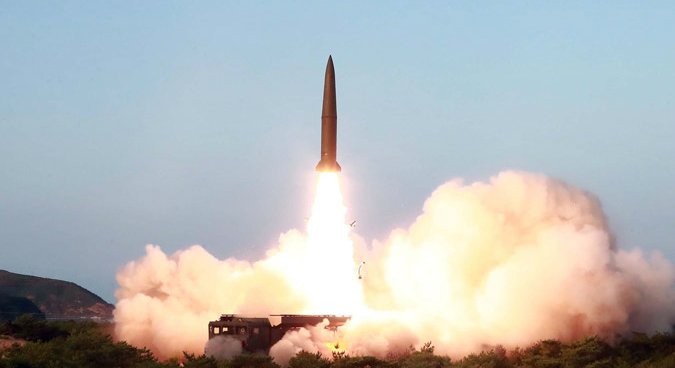
“I don’t think he will restart his nuclear program, as stated above, but intermediate and SLBM tests are likely, as are other robust testing of conventional weapons.

“Kim has all but ignored South Korea in 2019, and it appears that will continue. If the ROK were not severely constrained by UN sanctions, it could do more to help the North, but politically it cannot. Therefore, Kim finds the ROK of no significant assistance at this time. Moreover, the South willingly participated in certain down-scaled military exercises with the U.S. this year, which was interpreted by the North to mean that the South was fully in lockstep with U.S. policy.”♦

My ‘Peace & Prosperity’ Arirang TV Interview

TP190324180046_A1

“Peace & Prosperity,” a 30-minute public affairs program produced by Arirang TV, was broadcast on December 13 but is also re-broadcast throughout the week. Many thanks to Dr. Bong Youngshik of Yonsei University for his excellent questions on the rise of tensions on the Korean Peninsula this month and concerns about what 2020 will bring.

Here’s Arirang TV’s write-up for this episode:

“Tensions are escalating between North Korea and the U.S., as the year-end deadline Pyeongyang set for nuclear talks draws near. North Korea announced on Dec. 8 that a “very important test” took place at its Seohae Satellite Launching Ground in Dongchang-ri.

“North Korea’s ambassador to the UN said denuclearization is already off the negotiating table, while U.S. President Donald Trump warned that North Korean leader Kim Jong-un could “lose everything” through hostile acts. What is behind the heated exchange of words ? Are we looking at a possible return to “fire and fury?”

“To break down the latest developments, we are joined by Park Won-gon, Professor of International Studies at Handong Global University. To broaden the perspective, we also connect with guest experts on Skype, including Jim Walsh, Senior Research Associate at the MIT Security Studies Program, and Mark P. Barry, Associate Editor of the International Journal on World Peace.”

My Skype interview segment begins at the 17:59 mark:

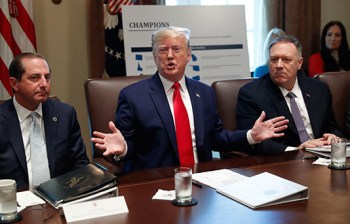
My Remarks to Newsweek Magazine on “Trump’s Strategy to Walk, Not Talk, Is Making Life Difficult for Both Koreas”

U.S. President Donald Trump waves as he leaves a news conference at the JW Marriott Hanoi, following talks with North Korean leader Kim Jong Un in Hanoi

Many thanks to Newsweek senior foreign policy writer Tom O’Connor for giving me the opportunity to comment today. Here’s the link to his Newsweek article on “Donald Trump’s Strategy to Walk, Not Talk, Is Making Life Difficult for Both Koreas.”

The Potential U.S. Abandonment of South Korea in a Second Trump Term

lbfcklqh5ei6vf2iu6kdh3h4te

Trump’s sudden abandonment of his allies, the Syrian Kurds, to the Turks and their Arab militias has alarmed many Asian affairs analysts, myself included.

If Trump is re-elected to a second term in 2020, he may withdraw most of the 28,500 U.S. troops in stages from South Korea, leaving just one or two thousand behind so that the U.S.-ROK Mutual Security Treaty remains intact. While today, the U.S. defense perimeter against China includes South Korea (in contrast to January 1950, when it was excluded, which led to the Korean War), the President can insist on a massive drawdown of U.S. Forces Korea because the “South Koreans are rich, can take care of themselves and they don’t need us, and we’ll save a lot of money.”

He will argue we’re selling South Korea the most advanced F-35 fighter jets, transfer of UN Command operational control (OPCON) is smoothly transitioning to the ROK with a 2022 target, and the Japanese and even Israelis can help South Korea with its defense technology needs. The President will state this case in the early weeks of a second term and get his administration to carry it out over four years. As the U.S. retreats to a 1930s-style isolationism, which contributed to the outbreak of World War II in both Europe and the Pacific, South Korea will have to realign itself vis a vis China and Russia, even if its frayed relations with Japan somewhat improve.

As Trump now demands a five-fold increase in the ROK’s contribution to U.S. troop support in South Korea, it’s like blackmail for protection money: “Pay up or we’ll leave.” And it seems the main U.S. interest in maintaining the alliance is to potentially use South Korean troops outside the Korean peninsula in the “Indo-Pacific” theater. Otherwise, let the South Koreans defend themselves. Japan is next to be strong-armed to pay a usurious amount to keep U.S. troops there, and Trump may withdraw from NATO in a second term.

U.S. withdrawal of all but 500 military advisors left South Korea highly vulnerable after its 1948 independence, and the Chinese communist victory in 1949 coupled with placing South Korea outside the U.S. defense perimeter in 1950 set the stage for the Korean War. Today, China won’t seek war, but would seek to Finlandize North Korea and neutralize South Korea until Korea reunites under Chinese patronage.

This is the fruit of “America First.” The Kurds threw potatoes at withdrawing American troops last month. What will our other allies throw? ♦

“Still Possible for U.S.-DPRK Negotiations to Succeed”

I was interviewed by email by Radio Free Asia’s Korean Service on the status of U.S.-DPRK negotiations, as well as on North Korea’s demand that South Korea demolish its tourism facilities in the Kumgang Mountains, and the reported U.S. offer to develop the North’s Wonsan area for tourism.

Here’s the link to the original Korean text. You can use Google Translate to get an idea of the entire content in English, including what other experts said:

미북, 아직 협상 성공 가능성 열어둬” 

And below is what I submitted in full to Radio Free Asia in English last Thursday:

« I don’t see much connection between Kim’s order to demolish South Korea’s Mt. Kumgang facilities in the North and a possible American offer to develop the Wonsan area for tourism. The facilities built by Hyundai after the first inter-Korean summit in 2000 have been poorly maintained, if at all, since Hyundai’s departure, and so the order to demolish these structures and build new ones in North Korean-style is primarily a way for Kim to emphasize his new way of self-reliant leadership — one that does not depend on economic assistance from South Korea. While it’s possible President Trump had hinted to Kim at some point that he would like to help develop the Wonsan region for tourism, which is credible, such an offer as part of the recently halted Stockholm negotiations, if indeed made, would not have had appreciable influence upon North Korea. After all, these are negotiations over their nuclear weapons program.

“There are only two months left in the year. As much as President Trump is enmeshed in increasing domestic political problems that may threaten his ability to remain in office or adversely affect his reelection, North Korea is acting understandably to try to jumpstart the U.S.-DPRK negotiations before year’s end. This is less to do with the American election calendar, and more to do with that every January 1, Kim Jong Un gives guidance to the nation for the entire year. If he indeed is going to set a new direction, one which may temporarily rely more on China and Russia, and keep his relations with Trump on hold, without increasing tensions too much, then from the perspective of his continuing leadership, Kim must provide the direction for the party, state and people from the first day of the new year.

“Kim is less affected by the unpredictability of Trump’s domestic situation than by a sense that the United States is an ongoing geopolitical entity, regardless of who is president, with a great deal of continuity in its policy towards the Korean peninsula and Northeast Asia. Hence, Kim may very well believe any future changes in American policy will have less to do with the personality of the American leader than with changes in what the North regards as the correlation of forces within Northeast Asia as they affect the DPRK. In other words, Kim may believe that when the time is right, the United States, regardless of who is the leader, may alter its policy towards the North when it suits U.S. interests.

“As much as working level talks should proceed ahead, and arrive at an interim agreement, I believe Kim wishes to have a third official summit with President Trump as soon as possible. This probably has more to do with Kim’s domestic standing, and as a counterbalance against China, than with alleviating the pressures of economic sanctions. This is why Kim and his spokespeople continue to highlight the special relationship between Kim and Trump, and assign blame for lack of progress in relations to bureaucrats. President Trump is not inconsequential to the improvement of U.S.-North Korean relations, but if he were somehow politically incapacitated, had to resign, or did not win reelection, Kim Jong Un would find a way to proceed ahead to bolster his rule and his position in the region, with or without U.S. help. » ♦

A call for a Camp David-style approach to ending the North Korean issue

On Arirang News, I speculate on reasons why U.S.-North Korea working level talks in Stockholm broke down over the weekend and call for an intensive Camp David-style approach by top leadership to resolving the North Korea issue. Many thanks to Arirang News anchor Mark Broome and anchor/reporter Oh Sooyoung:

(broadcast Oct. 6, 9 pm NY time interview; Oct. 7, 10 am Seoul time; 7:45 minutes)

Overview piece broadcast at 11 pm NY time, Oct. 6 (12 noon, Oct. 7 Seoul time) including clip of my interview and paraphrasing of my email comments (3:00 minutes)

And a wrap-up piece that included a brief clip from my earlier interview:

Plus here were my thoughts prior to the start of the working level talks on Oct. 4:

Trump Is Wrong to Think He Can Make One-shot Deal with North Korea: My Arirang News interview, Aug. 21

In today’s interview with Arirang News, I discuss the South Korea-Japan trade dispute and GSOMIA, inter-Korean relations, and why President Trump must break the dynamic of believing that the only good deal is a big, one-shot deal, rather than a series of agreements that build trust. Many thanks to anchor Mark Broome for asking the right questions. Below is the link to my segment, broadcast at 7 am Seoul time, Aug. 21 (6 pm New York time, Aug. 20):


North Korea knows that to be ignored by U.S. is to be virtually dead politically

My Twitter thread unroll from July 26:

North Korea routinely goes through their gyrations until they are actually “ready” to negotiate. Until that point, they are immersed in their internal processes. They accommodate or adjust to no one until they evaluate they are ready.

Recall NK even postponed their June 2000 summit with Kim Dae Jung for a day without explanation. They just weren’t ready even though observers worried SK would get stiffed and the summit would get canceled. Remember July 27 is “Victory Day” for NK and it’s not surprising to see a military provocation and heated rhetoric in the run-up.

Far more than an invasion, NK fears being ignored by the U. S.  And with Trump’s frequent preoccupations with the “latest” issue (that a friend tells him about), such as Sweden’s detention of a U. S. rapper, it’s an even greater challenge for the North to keep Trump’s attention.

But no matter who is American president, NK knows that to be ignored by the U.S., to not have the undivided U. S. attention, is to be virtually dead politically. It’s not just about increasing leverage; it’s about avoiding being a political non-entity.

North Korean regime dynamics are definitely not well understood. Even when we think we understand, we judge based on our own values and perspective, not theirs. In the early ’50s, Nathan Leites wrote about the “operational code” of Soviet leaders. But NK is something else again.♦