I was interviewed by Arirang News on their “Global Insight” program today on North Korea’s latest missile tests and how the North is responding to Russia’s invasion of Ukraine. I was a guest along with Dr. Kim Jae-chun, the Dean of Sogang University’s Graduate School of International Studies. Many thanks to anchor Kim Mok-yeon. Here’s the full video:
I was interviewed today by Arirang News on its “New Day” program on China’s National People’s Congress meeting this past weekend as well as on the predicament it is in by supporting Russia’s policies toward Ukraine.
Below are the edited questions and my answers:
Q: Before we get to the meeting, let’s start with Beijing’s stance on the war in Ukraine. The CCP has flat-out refused to condemn Russia and has even refrained from calling it an “invasion” in the first place. Can you explain Beijing’s reasoning behind this?
A: First, with Russia’s Ukraine invasion, we’re now in uncharted waters. Last week’s Russian shelling of Ukraine’s largest nuclear facility is something that’s never happened before. Fortunately, no reactor was hit. But if electricity or plumbing were damaged, there could have been a meltdown far greater than Chernobyl, poisoning Russia, Europe and the world. Was this at all rational?
Now, supportive Chinese rhetoric aside, Xi Jinping seems to have had no idea Russia’s Ukraine invasion would be so extensive or of long duration, despite surely being informed of it on Feb. 4 by Putin. Xi also didn’t expect the global support mobilized on Ukraine’s behalf and rapid sanctioning of Russia. China hoped to look the other way as Ukraine was invaded, but now it’s in a situation where it may have to bail out Russia economically, meaning China would have to take on not one but two basket cases: North Korea and Russia. Also, Russia historically never has been trustworthy to China: Not only were there serious Sino-Soviet border skirmishes in the 1950s and ’60s, but in 1929, Stalin briefly invaded northern Manchuria to take control of the Chinese Eastern Railway, which terminated at a seaport (the Sino-Soviet rift is why Nixon went to Beijing 50 years ago). President Xi knows at any time, for any reason, Putin could pivot and even militarily threaten China to obtain what he wants.
Q: Do you share the view of many in Taiwan that Russia’s actions could preview a Chinese invasion of their island? Also, if China were to attack Taiwan, how would you expect the international community to react? Strongly-worded statements? Sanctions? Or an all-out military response?
A: China must be rethinking its options over Taiwan given the international reaction to Ukraine. But many military analysts doubt China currently has the amphibious assault capability to invade Taiwan. Moreover, Taiwan is the golden goose: An invasion would kill its vibrant economy. Taiwan reportedly may plan to sabotage its world-class chip fabrication plants, like TSMC, so China wouldn’t be able to use them after invasion. Finally, the U.S., as Taiwan’s main arms supplier and the chief guarantor of security in the sea lanes of communication in the South China Sea region, is highly likely to come to Taiwan’s defense if attacked, supported by Japan, Australia, and even by South Korea.
Q: Turning back to China’s National People’s Congress. As we noted, many experts expect a big reshuffle as President Xi prepares to start his third term. Is this because Xi wants young blood who will be unbendingly loyal to him or do think there are other reasons?
A: The main reason Xi has to reshuffle new personnel is to prevent the formation or strengthening of factions against him. There is opposition to Xi, and he knows where it comes from. So, Xi weakens pockets of opposition by reshuffling and bringing in new blood, so he can guarantee re-appointment as leader at the party congress later this year. There are some in China’s leadership unhappy with his imposition of highly centralized authority reminiscent of China under Mao, and disturbed by the curbs placed on China’s most prominent entrepreneurs.
[last question cut for time]
Q: Finally, ever since the pandemic crippled the world, China’s rivalry with and overt aggression toward the U.S. and the West only seems to have intensified. In your view, and based on what we know about the Xi Jinping doctrine, what is China’s end game?
A: I don’t see China as a territorially expansionist power, like Russia. But, it wants to supplant the U.S. as the dominant global power, so that the preponderance of global trade is conducted under Chinese auspices. China wants to make the world safe for its mercantilist policy but it would bestow protections upon countries that accede to its preeminence. Yet, China is quite nervous about its border regions which traditionally were not part of the core of Chinese empires, like Xinjiang, Tibet, and Inner Mongolia, as well as special areas like Hong Kong and Taiwan. To ensure stability, China has conducted oftentimes severe repressive policies against the peoples in its border regions to protect the core of Chinese power.
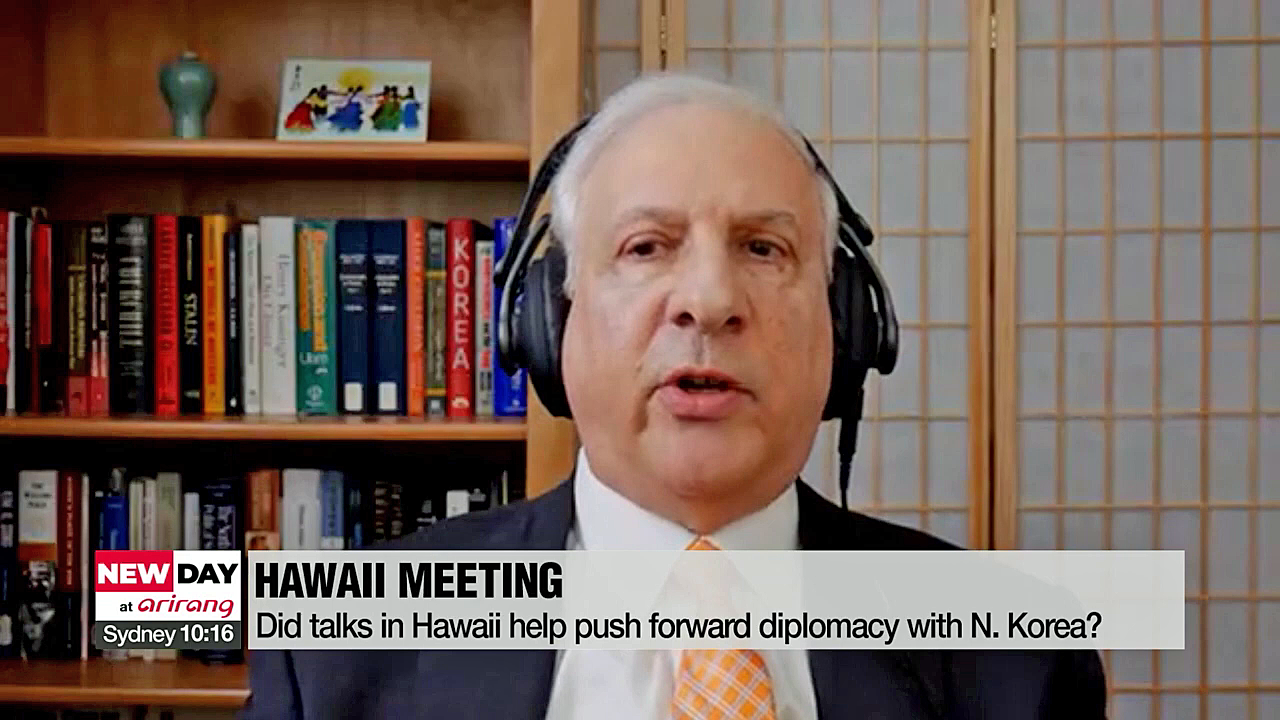
I was again interviewed today by Arirang News “New Day” program about the U.S.-Japan-South Korea meeting of foreign ministers and Secretary of State in Honolulu that took place on Saturday:
Here is an approximate transcript:
Last weekend, the top diplomats of South Korea, the United States and Japan declared a united front against North Korea after a rapid-fire series of ballistic missile launches by the regime throughout the month of January. Describing the launches as “destabilizing,” the diplomats also said North Korea must “cease its unlawful activities and instead engage in dialogue.” The three sides reiterated their commitment to the denuclearization of the Korean Peninsula, and their readiness to resume talks with the North. However, the regime has continually rebuffed overtures for talks from the Biden administration over the past twelve months. For more, we connect to Mark Barry, the Associate Editor of the International Journal on World Peace.
1. Firstly I’d like to get your reaction to the Hawaii talks as well as your thoughts on whether they are likely to move the needle in terms of diplomacy with North Korea?
This was a do-over from November when a trilateral meeting of deputy foreign ministers in Washington concluded with a one-person press conference by Wendy Sherman. There arose a behind-the-scenes dispute between Japan and SK over a territorial issue, which led to the appearance of a fractured trilateral alliance. This time the three nations gave the outward appearance of unity on NK in Honolulu, but internally I suspect much time was spent discussing US insistence of greater cooperation against China, reducing dependency on Chinese trade, and for SK, participation in Quad activities. So internally and outwardly I think there were two different tracks going on. SK reportedly offered some new ideas to engage NK, and then at the joint press conference, one Korean reporter asked a great series of questions on innovative approaches to the North, which unfortunately did not get a clear answer.
2. North Korea has refused to listen to any U.S. offers to resume talks since President Biden took office. It insists it’ll not return unless Washington drops what it says are hostile polices. What are these U.S. policies that the North considers to be “hostile”? And can you see why the North sees it that way?
Under Biden, there was the Treasury designation last month of 6 NK citizens to be sanctioned who were involved in procuring materials for missile development; and in December the designation of the DPRK minister of defense as well as an animation studio earning foreign currency. Also there has been talk of additional US sanctions and of resumption of regular joint US-ROK military exercises. Finally, I think, the nomination of Amb. Philip Goldberg, a former UNSC sanctions enforcer, as ambassador to Seoul, doesn’t assure the North. NK is really saying the US continues to have little to offer, that the US still wants it to give up its defensive weapons and military secrets for vague promises of what it might do in return. The US comes across to NK, worse than it did 30 years ago, as essentially making ultimatums, while the North aims to counterbalance Chinese pressure with ties with the US, but accepted as a permanent nuclear power not a junior power.
3. These talks happened as most of the international community’s attention is focused on Ukraine. Considering the geopolitical situation, do you think North Korea has slipped further down the Biden administration’s list of priorities? And if so, do you expect North Korea to get back on Washington’s radar?
If Ukraine is invaded soon, that may affect NK’s overall strategy, depending on the US response. Otherwise, I expect they’ll wait until after the Olympics, then test more missiles, although they’ll likely be more of the IRBM, SLBM or claimed hypersonic variety, not an ICBM. This will continue past the March 9 presidential elections, past the 110th birthday of Kim Il Sung on April 15, and maybe until the new ROK president is inaugurated in early May. By late May, Biden arrives in Japan for a Quad summit and meeting with PM Kishida, and may then fly to Seoul to meet the new ROK president. But I think the North will continue to abstain from nuclear tests because that will turn China and Russia against them, forcing them to cooperate on more stringent sanctions.
4. Finally, China is generally seen as the key to resolving the North Korea issue, but given how tense U.S.-China relations are right now, do you think this means little to no meaningful progress will be made… no matter how hard Seoul, Washington and Tokyo try?
China was only helpful in the “fire and fury” days of 2017, or back during the 6 party talks of 2005-08, but they’ve never been key to solving the nuclear issue because the North strongly distrusts them. Nonetheless, China insists NK has legitimate security concerns and interests, and urges tension reduction and negotiation with the North. Russia takes a similar tone that creating a toxic atmosphere of pressure makes it very unlikely the North will cooperate, and rather it will redouble its efforts. In the past, China has used its appearance of influence with NK to put the US in China’s debt, but in fact it has little political influence and the North Koreans resent Chinese attempts to interfere in the North’s foreign relations. Moreover, the US is now unlikely to ask for Chinese assistance with the North, as it may have done in prior administrations.♦
I was interviewed again tonight on Arirang News’ “New Day” program about the current state of the Ukraine crisis, and the U.S., EU/NATO and Chinese responses:
Here is a synopsis of the questions and my responses:
1. Russia continues to insist it has no intention of invading Ukraine. If that was truly the case, why do they have so many troops lined up along the border? And, do you foresee Moscow actually going ahead with an invasion or is this mostly posturing?
For now, Russia seems to be posturing to extract concessions through threats, and to weaken, even fracture, the dated NATO alliance. Already Germany is taking a more equidistant position between NATO and Russia, and France, Britain and other NATO members are nervous. Overall, this is Putin’s effort to overturn the post-Cold War order that has existed since 1992 and to reestablish a security environment more favorable to Russia. Curiously, there is no popular fervor among Russians for Putin’s tough talk against Ukraine, and Ukrainian national security officials say the U.S. is overreacting to Russia’s current military buildup.
2. How do you assess President Biden’s handling of the crisis? He made the incursion comment which ruffled a lot of feathers, including Ukraine’s. His critics argue that, on foreign policy, Biden has had a terrible 12 months, including the botched withdrawal from Afghanistan. Is this crisis partly due to world powers sensing U.S. weakness under Biden’s leadership?
Putin is also taking advantage of Biden’s attention being largely on domestic matters as well as of the U.S. humiliation from its botched Afghanistan withdrawal. At his Jan. 19 press conference, Biden answered the New York Times’ David Sanger’s question on Ukraine with relish, but made a gaffe when he said Putin would eventually invade Ukraine and a minor Russian incursion may elicit a proportional US response. The White House and Biden himself had to clarify those comments the next day. Some likened Biden’s remarks to Dean Acheson’s Jan. 1950 statement that South Korea lay outside the US defense perimeter, which Stalin took as a signal to prepare the North’s invasion of the South six months later.
3. President Putin will attend the opening of the Beijing Olympics early next month and have a summit with President Xi while he’s there, in which they’ll certainly discuss Ukraine. Since China wants to make a success of the Games and no major distraction, what message do you expect Xi to convey to Putin?
President Xi presides over a China that’s had broad options in its foreign policy and a coordinated partnership with Russia. But Xi will not tolerate Putin carrying on in a reckless manner and becoming a liability to China’s interests. Right now, Putin is employing threats with diplomacy, and I expect he’ll take no military action against Ukraine in the lead-up to the Winter Olympics, and maybe even weeks afterward, because this is China’s moment on the world stage, and Xi will emphasize this to Putin when they meet. Russia did provoke Georgia during the 2008 Beijing Summer Olympics, but China chose to ignore it. Both countries had different leaders 14 years ago, Hu Jintao and Medvedev, but today everything is different.
4. Finally, for most people who don’t pay close attention to world affairs, even those that do, this crisis seemed to come out of left field. Is this something that has been brewing for some time? And why is coming to such a head right now?
Putin has long considered the 1991 breakup of the Soviet Union to be Russia’s single greatest catastrophe of the 20th century. He’s trying to rebuild the buffer zone of friendly states Russia once had. Also, for Putin, it’s a red line for a state bordering Russia that had been a Soviet socialist republic since 1922, unlike the Baltic states, to become a NATO member or even to remain pro-Western as Ukraine has since 2014. Putin will not tolerate a democratic-leaning nation on its borders. That’s why the UK Foreign Office reported Putin may try to install a pro-Russia leadership in Ukraine. Putin also knows February is the best month for tanks as the ground in Ukraine is frozen, while it turns muddy in March. Overall, the steps you’ve mentioned that the U.S. and NATO are taking right now are precautionary and not out of the ordinary in this situation.♦
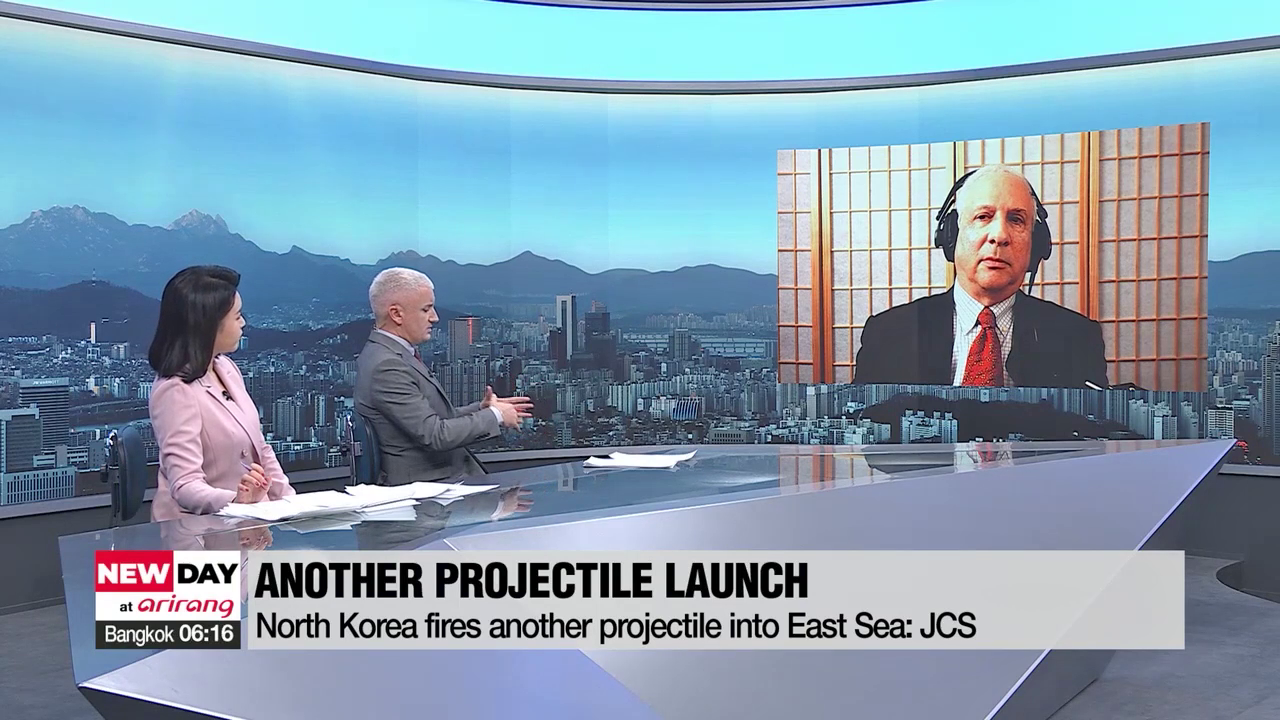
I was interviewed today on Arirang News’ morning newscast “New Day” about North Korea’s claimed hypersonic missile test of January 5 as well as today’s launch of an as-yet-to-be-identified projectile. I point out, in part, that the North could consider selling some of its advanced technology to a bad actor in a different region in order to compel U.S. attention. Many thanks to co-anchors Mark Broome and Kim Mok-yeon for the opportunity to express these views.
I was among three experts interviewed on the Canadian Broadcasting Corporation’s “The National” nightly newscast to discuss today’s Biden-Putin phone call. Many thanks to Travis Dhanraj, Senior Parliamentary Reporter, CBC News, for the opportunity.
Arirang News suddenly asked me to comment today on recent U.S. and NATO tensions with Russia over Ukraine. It afforded me the opportunity to comment on ill-advised U.S. and NATO policy toward Russia since the demise of the Soviet Union on Christmas Day 1991.
Again, many thanks to Mark Broome and Kim Mok-yeon for inviting me on their “New Day” program on a topic that did not directly affect Korea, yet at the end, I was able to make a point about a potentially constructive role Russia may play in the future of the peninsula. The full interview, which has received a large number of YouTube views, is below:
I was again interviewed yesterday on Arirang News’ “On Point” segment on its 8 am morning program, “New Day.” Many thanks to co-anchors Mark Broome and Kim Mok-yeon for their questions. Here’s the video:
And here is the gist of the interview:
Q: Why do you think Russia and China are pushing for the removal of sanctions on North Korea? Considering the other members — the U.S., the UK and France — would never agree and all have veto-wielding power, what’s the real motive behind Beijing and Moscow making this move — that’s doomed to fail — at this current time?
A: Russia and China have been consistent over the last 30 years that the North Korean nuclear issue must be settled without confrontation. They insist that NK has legitimate interests that must be respected, and that the Kim regime should be treated as a partner for peace and not as an adversary. In hindsight, Russia and China are probably more right than wrong, and as both countries border on NK, they don’t want to see regional instability in NE Asia. BTW, of the three UNSC P5 you mentioned, the UK has diplomatic relations with NK, but on the nuclear issue they follow US policy because nonproliferation alone has taken on a higher value than resolving a state of war that has persisted since 1953.
Q: In your view, how important is it that the international community maintains sufficient economic leverage over the North through sanctions to ensure the regime fulfills its denuclearization commitments? And would you support making the sanctions even tougher to try and force the North’s hand?
A: Bilateral and UN sanctions on NK are maintained because, in the end, the US has relied on military power and pressure rather than astute diplomacy since the collapse of the Soviet Union 30 years ago. Classic diplomacy in conflict resolution is now a rarity. Sanctions are a bargaining chip the US uses with NK, but there are three realities about sanctions on NK: The US doesn’t adequately enforce its own sanctions; China pays little heed to UN sanctions (except for in 2017); and NK has found a multitude of ways to skirt sanctions. Ironically, the DPRK is not the most sanctioned nation, but Iran is, followed by Russia. Moreover, NK has harmed itself far more with its ironclad COVID lockdown than it has been hurt by sanctions.
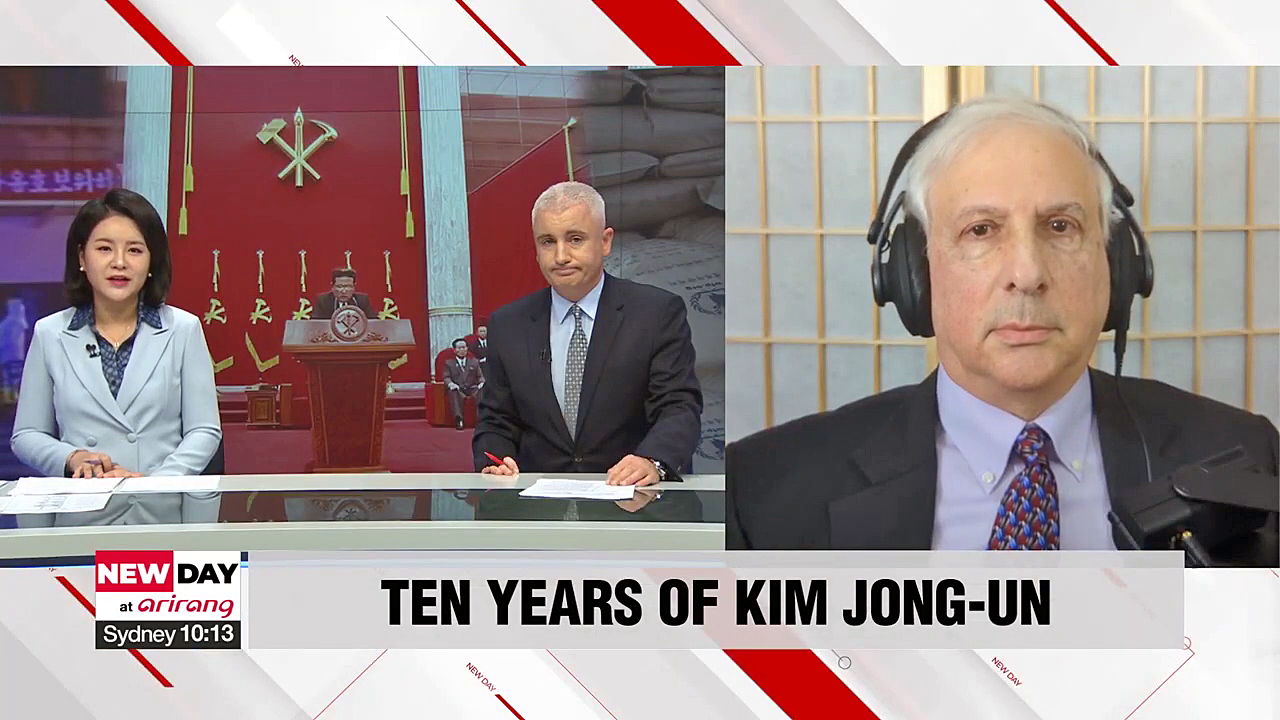
Q: Ten years ago, at the age of 27, Kim Jong-un was the North’s so-called “Great Successor.” Fast-forward to 2021 and the regime is in crisis — arguably poorer and even more isolated than when he took power. How do you assess Kim’s decade as North Korean leader?
A: I knew three Korean-Americans who attended Kim Jong Il’s funeral on Dec. 28, 2011. They each personally expressed their condolences to Kim Jong Un, and I later got to see their photos of him. Kim looked absolutely devastated, not only at the death of his father, but at the sudden burden thrust upon him at age 27. Many doubted he’d make it beyond the first year or two, because successions are a fragile time for regimes dependent on a single, absolute leader. Kim did what he thought he had to do to consolidate power. And none of the other leaders who accompanied the hearse at his father’s funeral are alive or in power as of today. For the economy, Kim probably did more than he’s given credit for, and he undertook bold initiatives with both President Moon and Trump. But still Kim is surrounded by familiar problems.
Q: Some experts say Kim is facing his toughest moment as leader yet – crushing sanctions, the pandemic, food shortages and growing economic trouble all converging. Do you think Kim and his top aides recognize something has to change — and fast — to ensure he remains in such a powerful position in another 10 years from now?
A: That’s the existential question for Kim: Will the next ten years be no better — or worse — than the first ten? My hunch is, after the next ROK president takes office, Kim will try to arrive at some kind of an accommodation with South Korea because his only other choice may be a de facto Finlandization by China in which China greatly invests in the North’s economy but at the expense of NK’s full independence and sovereignty. Kim will never accede to that. By accommodating with the South, he gains both political leverage against China and substantial economic support from SK. If that occurs, the best US response would be diplomatic recognition of NK after a tacit understanding about the disposition of the North’s nuclear weapons program.♦
I was interviewed today on Arirang News’ 8 a.m. newscast, “New Day,” about Kim Jong Un’s Oct. 10 speech on the 76th anniversary of the Worker’s Party of Korea. Many thanks to co-anchors Mark Broome and Kim Mokyeon:
Below is an outline of the four questions asked and my abbreviated answers:
Q: Some experts are viewing Kim’s remarks as an attempt to shore up internal unity as the North’s economic woes become increasingly more dire — and that’s not to mention the negative effects of the pandemic and numerous natural disasters. That’s their take, but how do you interpret Kim’s remarks?
A: The socialist model of economic mobilization, well-known from the first five-year plans of the Soviet Union, demonstrated throughout World War II and during the post-war reconstruction of the economy, is highly effective. It’s also the 10th anniversary of Kim’s assumption to power so relying on a five-year plan is a hallmark of a Stalinist-style of leadership.
Q: Speeches full of nationalistic sentiment and “we are all in this together” are nothing new when it comes to North Korea, but is there anything to suggest Kim and the regime’s elite are genuinely worried that things could get so bad that there could be either an internal challenge to his power or even a popular uprising?
A: These mobilization campaigns also expose those who disagree and they get purged, so internal challenge not likely. NK’s biggest fear in fact is ongoing Chinese pressure to conform its foreign and defense policies to those of China and pressure to slowly integrate the DPRK economy into that of China’s Northeast, leading to a progressive loss of sovereignty. That for NK is an existential threat.
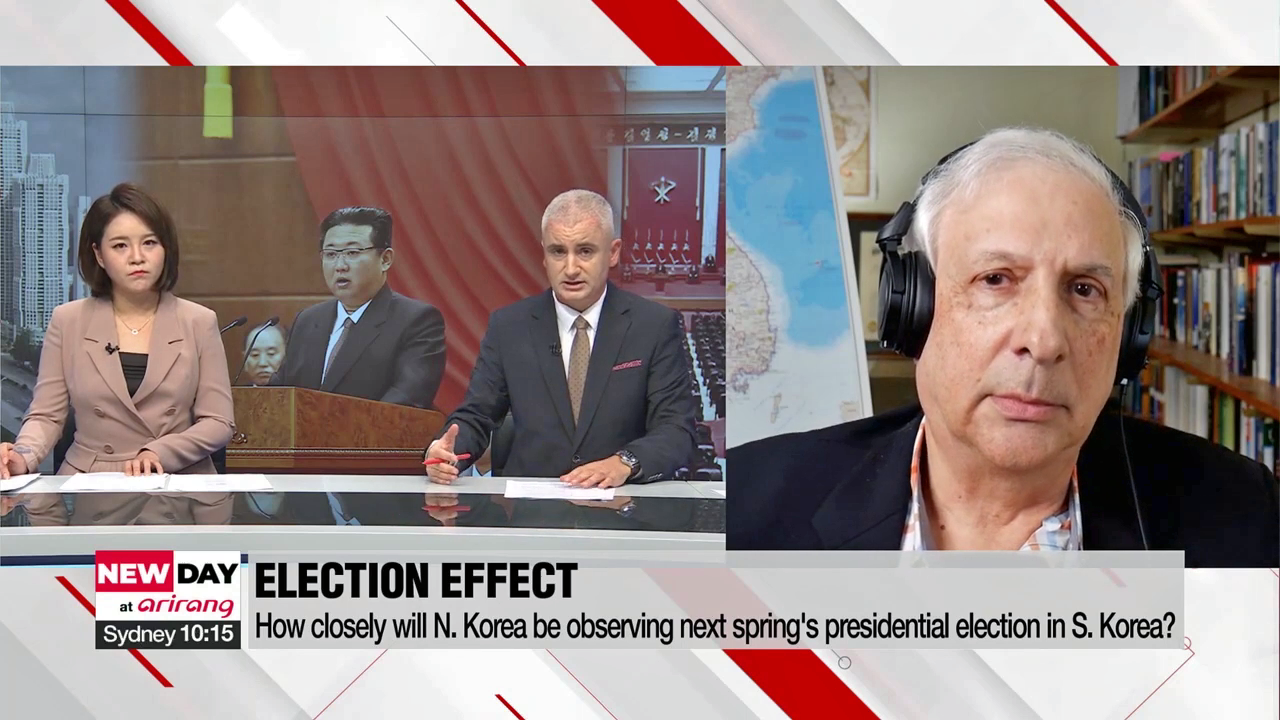
Q: The North has been softening its tone toward the South in recent weeks. However, President Moon Jae-in’s term effectively ends in five months. How might the North’s attitude shift toward Seoul should the more hawkish People Power Party take over the levers of power in South Korea in March 2022?
A: North Korea knows that a conservative SK government will at best pay lip service to inter-Korean relations but in fact urge the U.S. not to engage the North, which will make NK unable to balance Chinese pressure and thus create an existential crisis for it. That’s why this is a very crucial election for NK.
Q: Finally, President Biden has been in the White House for just over nine months now. Despite his administration’s efforts, the North has repeatedly rebuffed U.S. calls for talks. How do you assess the Biden administration’s diplomatic outreach toward North Korea to this point?
A: There appears no U.S. desire to tackle the NK issue seriously at all; that’s why it appointed Amb. Sung Kim only as P/T working on NK, otherwise he remains ambassador to Indonesia, and why at a recent ASEAN meeting Secretary Blinken urged greater cooperation on DPRK sanctions. Biden seems less interested in a Korean peace solution than he is in a modicum of a two-state solution between Israel and the Palestinians.♦
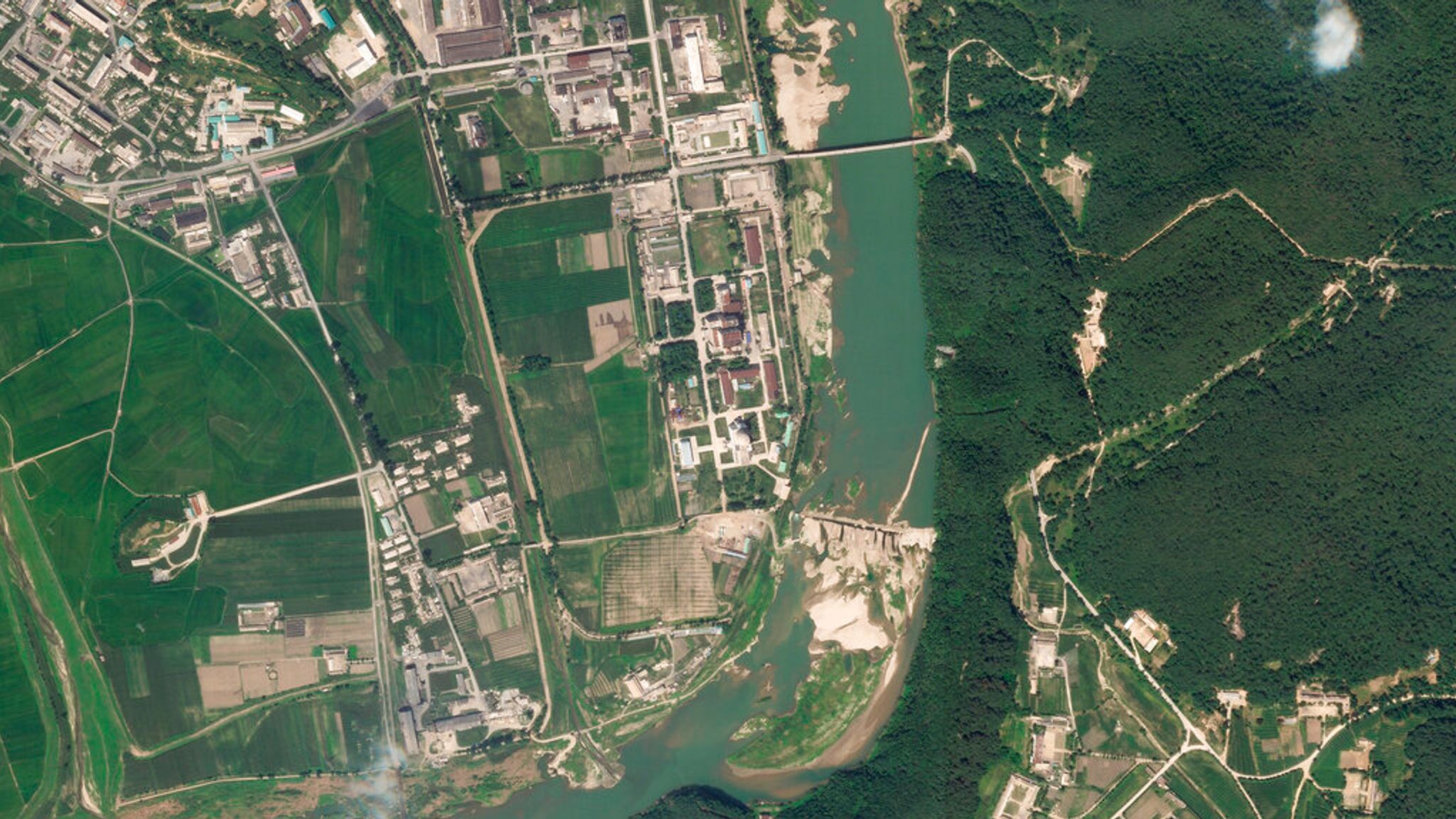
I was interviewed tonight by Arirang News’ “Global Insight” program on the recent resumption of North Korea’s Yongbyon reactor, and tried to give a 30-year perspective of the ups and downs of the U.S. policy approach toward the nuclear issue.
I was joined by Prof. Eun-jung Lim of Kongju National University. Again many thanks to Oh Sooyoung for moderating and putting together an engaging program.






 Mark P. Barry's Blog