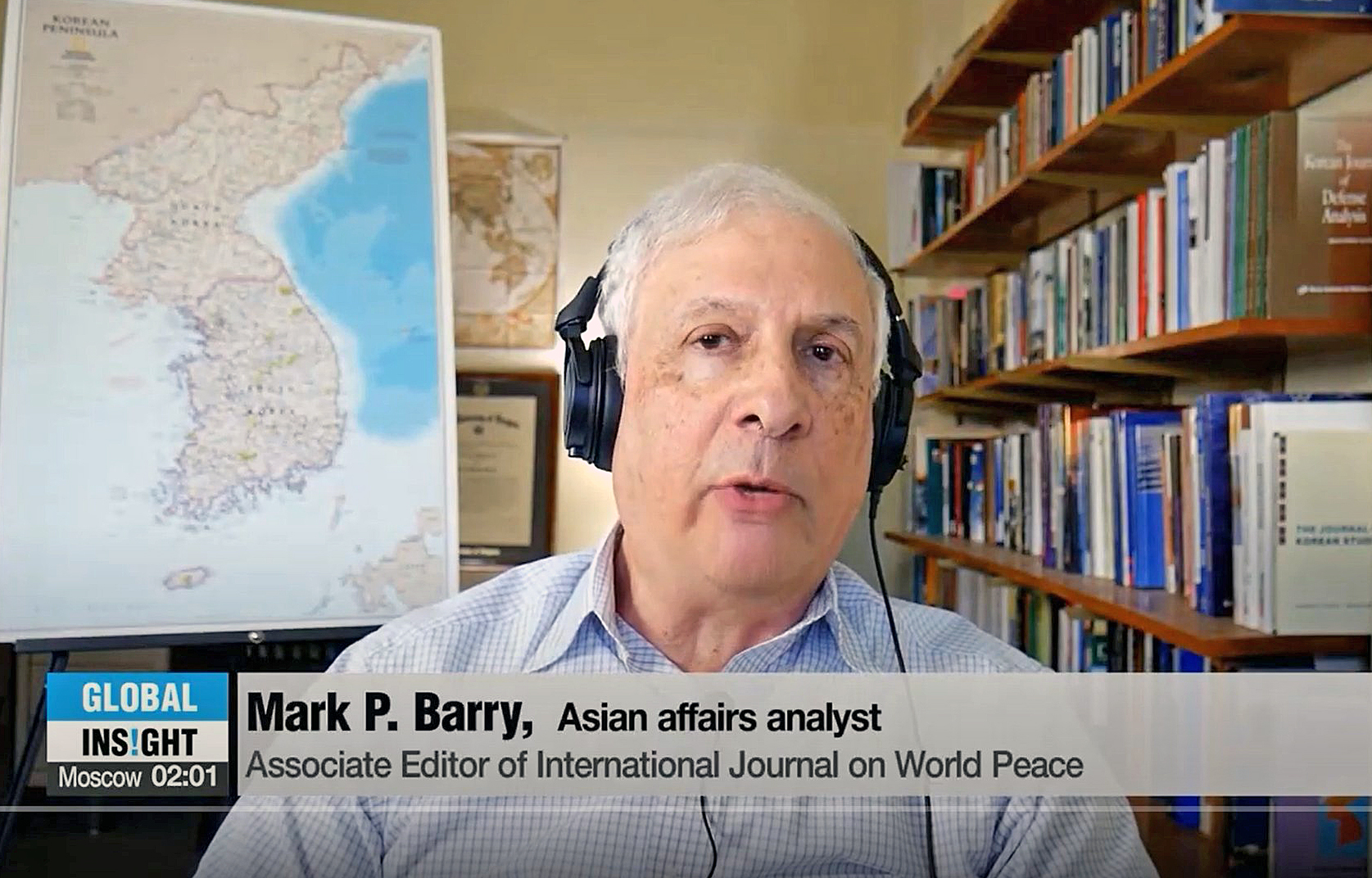
I was interviewed today by Arirang News’ “Global insight” on North Korea’s reaction to the Biden administration policy review toward the DPRK and to the Biden-Moon presidential summit last month. The program’s other guest speaker was Dr. Ramon Pacheco-Pardo of King’s College London. Many thanks to Sooyoung Ohand her “Global Insight” team.
An adaptation of my emailed comments to Radio Free Asia’s Korean service today on Kim Yo Jong’s warnings to the U.S. and ROK on joint military exercises:
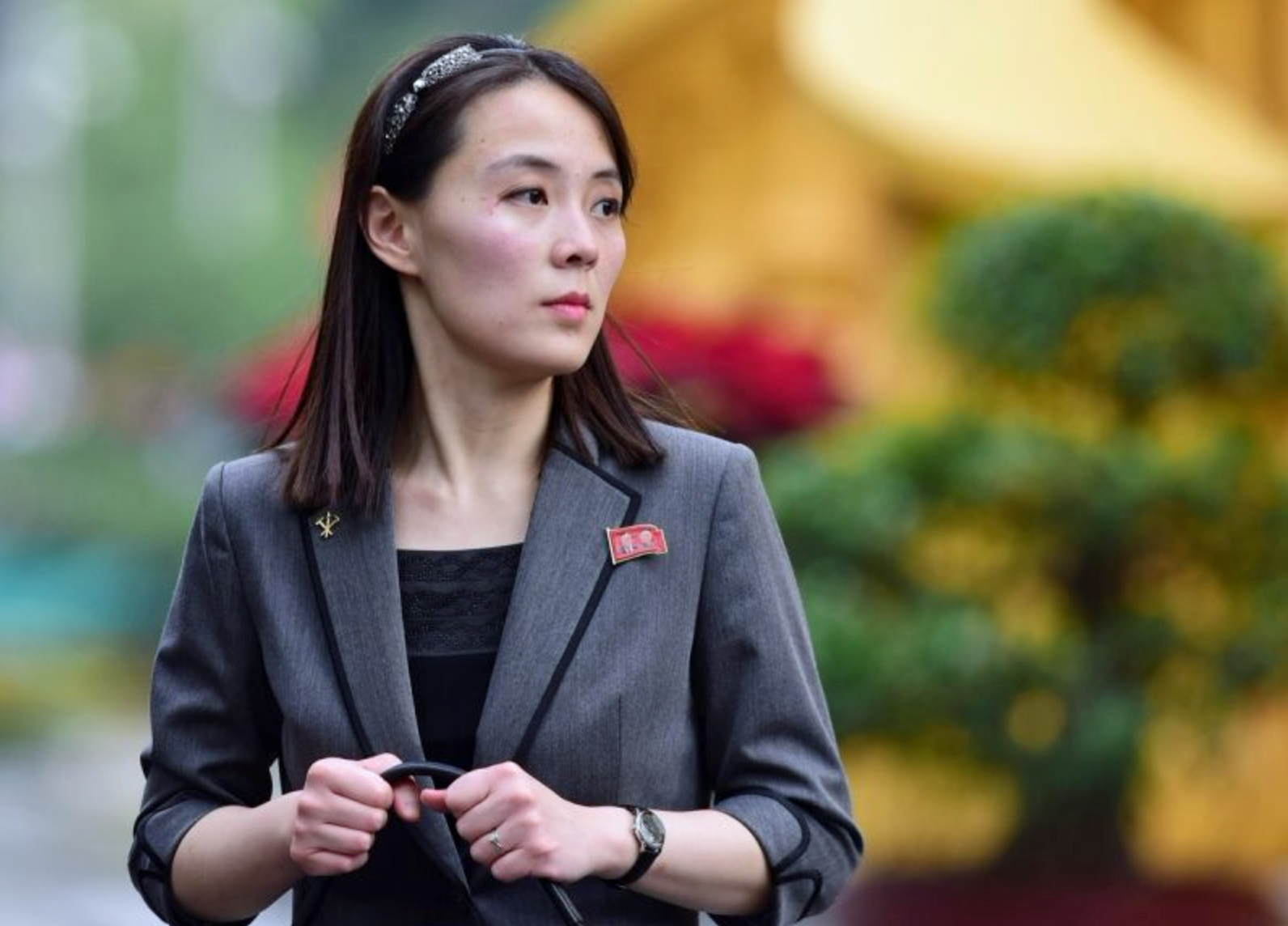
I liken Kim Yo Jong’s (younger sister of Kim Jong Un) March 16 comments as almost comparable to having a Twitter account, only she speaks through official state propaganda organs. Her comments, directed mainly at the ROK but also to the U.S. on the occasion of Secretary of State Blinken’s and Defense Secretary Austin’s joint visit to the region, are much more colorful than other spokespersons for the DPRK, but the threats she makes themselves don’t seem much different. It seems after four years of Trump, it’s more permissible to name call as part of normal international politics. But for Kim Yo Jong, she has developed a distinctive, shrill voice since last June, when the inter-Korean liaison office was demolished.
Overall, North Korea is afraid that no movement will be possible under the Biden administration because it seems only to wish to contain and manage the problem of the North’s nuclear program, but not solve broader political problems. Even though it is not finished with its policy review for North Korea, the U.S. has already implied it does not necessarily place much credence in the Singapore Declaration signed by President Trump. The DPRK is concerned the U.S. will not honor the Singapore Agreement as a baseline because the U.S. will allege that the North has not seriously abided by the spirit of the agreement.
If the U.S. is not willing to recognize the Singapore Agreement as a baseline, then the Biden administration will essentially be relegating the entire Trump diplomacy with Kim Jong Un, including Hanoi and DMZ summits, as well as presidential correspondence, to irrelevancy. In effect, North Korea is afraid the U.S. will revert to an Obama-era policy, but with a much stronger emphasis on containing China, in alliance with South Korea and Japan. This leaves resolution of outstanding issues with North Korea by the wayside.
Meanwhile, an advantage of the COVID-19 lockdown, regardless of how seriously concerned the DPRK is about the influx of the disease from beyond its borders, is that it has forestalled continued penetration of the North’s economy by China. It has given Kim the opportunity to buy time to prevent increasing Chinese economic and political pressure from irreversibly affecting DPRK sovereignty and independence. This is the reason North Korea continues to seek agreement with the U.S., not just to relieve UN sanctions, but to offset Chinese pressure with an improved relationship with the U.S. But the U.S. appears unwilling to acknowledge there may be an opportunity for it and instead sees things in pre-2018 terms.
It’s a pity that Trump would not concede to Biden after the November election and receive him as president-elect in the White House so Trump could have informed Biden about the benefits he saw of building upon his own relationship with Kim Jong Un, and Trump could have even urged Kim to feel confident he could make a deal with President Biden.♦
An adaptation of my full emailed comments today to China Newsweek (no relation to Newsweek) on the assumption to office of ROK Foreign Minster Chung Eui-yong and the implications for U.S.-DPRK relations under the Biden Administration:
Newly-appointed ROK Foreign Minister Chung represents President Moon’s best effort in his remaining year in office before the March 2022 presidential elections to see if the Biden administration will show anything more than pro forma interest in improving U.S.-DPRK relations. Right now, Iran is one of President Joe Biden’s highest priorities, and we can presume that Biden will embrace some of Trump’s tougher line with China. Frankly, Biden wants to avoid seeing the North Korea nuclear issue become a higher priority than it is right now.
Unless he appoints a Special Envoy for North Korea, President Biden cannot spare anyone of stature right now; even Deputy Secretary of State Wendy Sherman, who met Kim Jong Il in 2000, will likely be tasked to focus more on the Iran situation as she was lead negotiator for the JCPOA in 2016. Although Chung has the best relationship with Kim Jong Un (from early 2018), Secretary Blinken will likely not budge if Chung pleads with him to focus more on the Korean peninsula. All Blinken wants to do is get the U.S.-ROK SMA cost-sharing agreement nailed down equitably, and probably any resumption of joint exercises next month will be severely hampered by COVID anyway. A Biden-Moon meeting this year may in fact have to be virtual.
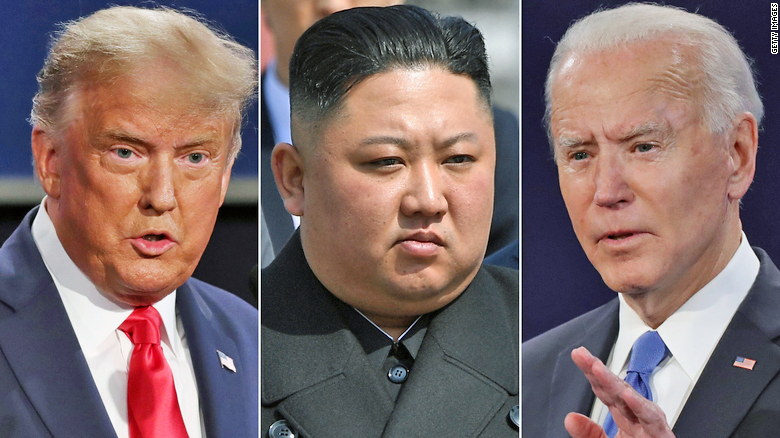
While Trump’s three meetings with Kim were unprecedented and historic, Trump was unwilling to make a partial or interim deal. That was his failure at Hanoi two years ago. Because nothing further was accomplished other than a courtesy meeting at the DMZ that June, Trump’s diplomacy with North Korea now has a bad reputation because of Trump’s behavior after losing the November 3 election and his constant allegations of fraud. Whatever good was in those three meetings with Kim is now considered highly tainted because of Trump’s greatly diminished political stature in the foreign policy realm.
While increased inter-Korean cooperation without the U.S. is a way out for the North, North Korea will not move in that direction because South Korea by itself is not enough. Only with the U.S. can Kim balance his relations with China, and only the U.S. can relieve the UN sanctions imposed upon him. While a DPRK accommodation with the ROK is a likely path for the longer-term future, it is only meaningful if the U.S. backs it. Instead, the Biden administration seems interested only in managing the issue and not investing the effort at this time to make meaningful progress. Biden is surely calculating that it will take four years at minimum to undo the foreign policy damage done by the Trump administration, and even that is an optimistic assessment.
In the end, Kim Jong Un may try to force the issue with Biden, but if he does so in the wrong way or at the wrong time, it could backfire on him and make his precarious situation even worse. And for the Democrats, even more than the Republicans, North Korea is synonymous mainly with the nuclear issue, and there is little sense of the history since 1945 of how we got to this point. Biden only seeks to minimally manage the North Korea issue because his administration is greatly over-burdened with domestic and other foreign policy priorities.♦
My interview today with Arirang News’ “Global Insight” program on the likely South Korean and U.S. approaches to North Korea in 2021. Honored to be the first guest of 2021 along with Lt. Gen. Chun In-bum (Ret.). Many thanks to anchor Oh Sooyoung for making our interview possible. Lots more I could have said had there been time (like recommending a Camp David-like approach in resolving Korean Peninsula issues and ending the Korean War).♦
Kim Jong Un may not acknowledge that Biden is President until Jan. 21, partly out of respect for Trump, who hasn’t and may never concede. Kim has adhered to his understandings with Trump since June 2018 and not tested long-range missiles or conducted nuclear tests. Kim’s position to Biden is likely to be that the U.S. must build on his agreement with Trump.
Conversely, if Kim were to test a long-range missile (provocation) in early 2021, he would unilaterally break his understanding with Trump’s successor. The likely reason Kim might break that understanding is if Biden declares in his early days as President that Kim’s agreement with Trump is not binding on him.
The Biden Administration should therefore make clear it is willing to negotiate with Kim and will abide by the understandings he reached with his predecessor as long as Kim does likewise. Biden could also offer COVID assistance to the DPRK.
Let’s just hope that Trump doesn’t destroy his letters to Kim, which he wouldn’t even show to Bob Woodward, and that the full negotiating record will be preserved.♦
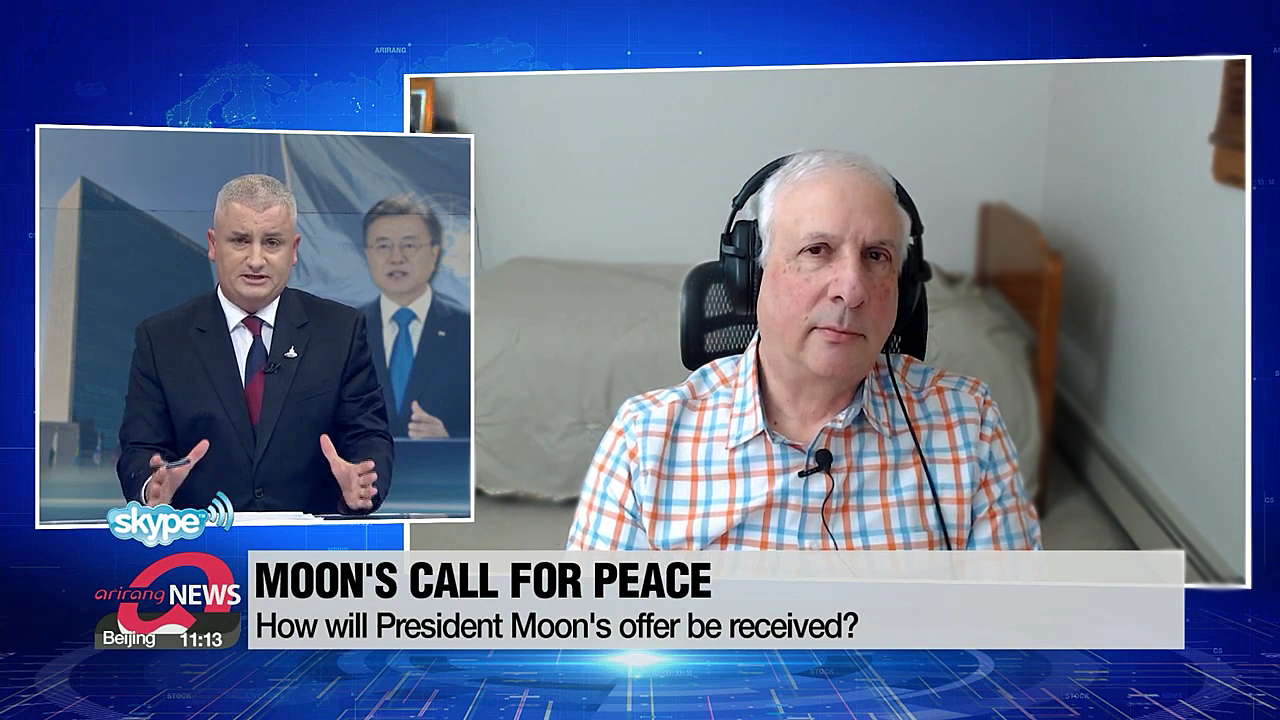
My Arirang News interview today (Korea time) on Presidents Moon, Xi and Trump’s video speeches to this year’s UNGA High-Level Meeting General Debate. The interview took place at noon Korea time (11 pm ET) on Arirang News’ mid-day broadcast hosted by anchor Mark Broome. Primary focus was Moon’s renewed call, first made in 2018, for an end-of-war declaration to bring peace to the Korean Peninsula.
Most of the discussion of Bob Woodward’s new book, Rage, has been around President Trump’s handling of COVID-19 and his “love letters” from Kim Jong Un.
But as I point out in my Arirang News interview of September 17 (see my previous post), a lot less attention has been paid to Woodward’s two chapters (33-34) on son-in-law Jared Kushner’s views of Trump’s political perception and media management, and they are probably the most important chapters in the book. What journalists have written on these chapters focuses on specific examples Kushner gives rather than the larger picture he paints. Chapters 33-34 are based on Woodward’s own taped interview with Kushner (that Kushner disputes) and other sources.
Woodward says Kushner expressed awe at Trump’s dominance of the media: “If the president didn’t tweet it, it didn’t happen” sums up Jared’s estimation of his father-in-law’s ability to redefine political and other realities by his constant 24/7 exposure to mass media via Twitter, television and print media. The implication is if Trump receives incessant media exposure, good or bad, he still comes out the winner; lack of media exposure for Trump could be his political death knell.
Woodward writes, “On February 8, 2020, Kushner advised others on the four texts he said someone in a quest to understand Trump needed to absorb”:
Kushner says to read a March 8, 2018 opinion column by Wall Street Journal columnist and Pulitzer-winner Peggy Noonan. Her column argued Trump’s style is “crazy…and it’s kind of working.” Kushner made it clear to Woodward that his endorsement of the column was central to understanding Trump.
Kushner explicitly states that Alice in Wonderland is a guiding text for Trump’s presidency. Jared paraphrased the Cheshire Cat: “If you don’t know where you’re going, any path will get you there.” This is tantamount to admitting Trump’s presidency is directionless — except that directionless is considered “flexibility” rather than rigidity.
Kushner recommends reading The Gatekeepers: How the White House Chiefs of Staff Define Every Presidency. Author Chris Whipple’s chapter on Trump notes the President had no idea how to govern but was reluctant to follow the advice of his first two chiefs of staff (he’s on number four now). Thus, “Trump will be Trump, no matter his chief of staff.”
The last text Kushner considers necessary to understand Trump is Win Bigly: Persuasion in a World Where Facts Don’t Matter by Scott Adams. Adams contends Trump’s misstatements of fact are not errors but part of a technique called “intentional wrongness persuasion.” In the end, according to Adams, Trump “can invent any reality…and all you will remember is that he provided his reasons, he didn’t apologize, and his opponents called him a liar” like always.
Woodward summarizes Kushner: “Controversy elevates message” which is the core understanding of communication strategy in the Internet age and Trump.
The four texts combined, in Woodward’s view, paint Trump as “crazy, aimless, stubborn and manipulative,” and he found it hard that anyone would recommend these as ways to understand the President. Later, he quotes Kushner: “[The President] somehow manages to have his enemies self-destruct and make stupid mistakes. He’s just able to play the media like a fiddle, and the Democrats too. They run like dogs after a fire truck, chasing whatever he throws out there. And he solves the problem” and goes on to the next thing.
My take is that Kushner’s comments inform us on Trump’s approach to North Korea. The only real goal in his three meetings with Kim Jong Un in 2018-19 was to make sure there was a media circus showing Trump engaging with Kim, because almost no one (he thinks) cares about the details. So, after not even a partial agreement on the nuclear issue (only a halt to nuclear and ICBM tests), and no peace declaration to end the 70-year-old Korean War, Trump credits himself in the current campaign as having reduced tensions — tensions he himself was at least 50% responsible for in 2017, beginning with his “fire and fury” statements and UNGA speech.
Woodward repeatedly quotes Trump blasting our ally since 1954, South Korea, for taking “advantage of us,” the President even exclaiming that Seoul’s skyscrapers could only be built because America provided the money for the country’s protection.
Trump does not provide the public with tangible success — only the image of success — because Trump is always “winning.” Trump’s only goal is to continue to appear to win, to appear to be on top of issues (and pull back and wash his hands when nothing he tries works, as with COVID-19), and always remind people that only he can do the job and everyone else is a jerk or a wimp. So, in the end, the joke’s on us, because Trump wants (at least) four more years to continue to “win” and MAGA, but it is only for his and his family’s (and cronies’) benefit, and it will be at our expense.
In the end, as famed jazz trumpeter Wynton Marsalis has been saying, “we’re being hustled,” and that “keeps us at each other’s throats and prevents us from working together to build a more equitable and friendly world.” We’re the mark in the con, period.
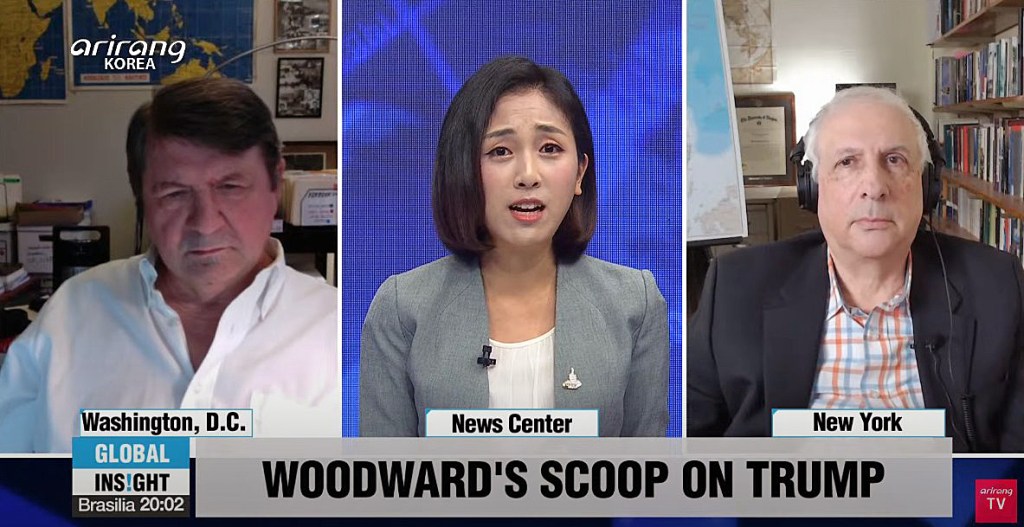
My interview today (September 17) on Arirang News “Global Insight” program on Bob Woodward’s new book, Rage, and what it tells us about the relationship between President Trump and Kim Jong Un. I am joined by The Nation’sTim Shorrock. Many thanks to anchor Oh Sooyoung for having us both on. Tim does a great job in addressing Trump’s handling of the pandemic and President Moon’s brokering role between the U.S. and North Korea. I focus on how Trump’s New York realtor buy-sell framework remains his exclusive approach to a pressing regional security issue and the peninsular division that’s lasted 75 years. ♦
My remarks to China Newsweek on the Biegun visit to Seoul July 8-9 are included in their current issue. Here is what I wrote in full:
“In their visit to Seoul earlier this month, I do not believe Deputy Secretary of State Stephen Biegun or Deputy Assistant Secretary for North Korea Alex Wong had any side meetings this time at Panmunjeom. Publicly, the U.S. is back to its old playbook of asking North Korea to change its position first before the U.S. will change its own (or give the appearance of change). This projects that the Trump administration is not neglecting the North Korea issue during the closing months of the U.S. presidential election, but not surprisingly, making no serious effort to move things forward. Though Trump said he would consider another summit with Kim, clearly he meant after he is re-elected – probably in 2021.”
“I doubt North Korea will rely on South Korea anymore in engaging the U.S. because from Kim’s point of view, President Moon “couldn’t deliver” — he couldn’t convince Trump to make a deal that both sides would agree upon. I actually don’t think this is Moon’s fault. Trump was utterly unrealistic in his demands to Kim because in real estate you buy the whole building, not just parts of it incrementally. Trump will not associate himself with an interim deal, because that’s not how he sees himself: someone who makes one big deal. North Korea may realize that, aside from historical and institutional U.S. hostility to North Korea and its nuclear and missile programs, Trump cannot be convinced to agree to a partial deal. Everything is take it or leave it. That’s why in Hanoi he said, “No deal is better than a bad deal.”
“So with less than two years left in his term, and with Trump continuing to pressure South Korea to pay vastly more for cost-sharing of U.S. troops there, President Moon is becoming somewhat irrelevant to U.S.-DPRK relations. His main strength is he has very good personal relations with Trump, but he cannot speak for him. And Biegun’s partial purpose in visiting Seoul in effect was to remind the ROK not to get ahead of the U.S. in inter-Korean relations — not to act unilaterally or be perceived to be circumventing UN sanctions. This plus the cost-sharing demands have created greater distance between the ROK and U.S. and imply that the U.S. has a veto over the improvement of inter-Korean relations. Nonetheless, I don’t see inter-Korean or U.S.-DPRK relations improving until the North sees who becomes the next U.S. president. We’ll know that anywhere between Nov. 3 and Jan. 6 next year.”
Many thanks to China Newsweek’sCao Ran, who writes on North Korea.♦
Photo at top: Deputy Secretary Biegun with ROK Foreign Minister Kang Kyung-wha on July 8, 2020.
Intro to Arirang News’ “Global Insight” interview program for June 17, 2020 Korea time:
“After threatening to take military action against South Korea, North Korea blew up the inter-Korean contact office on Tuesday — this after weeks of strong rhetoric against the South, and upon the 20th anniversary of the two Koreas’ joint declaration for peace and cooperation. What is behind this recent surge of aggression and how far will North Korea go? To delve into this issue, I’m joined by Chun In-bum, retired Lieutenant General and Commander of the Special Warfare Command of the Republic of Korea Army and Dr. Mark P. Barry, an analyst based in New York who’s been following North Korea for more than three decades.”
Many thanks to anchor Sooyoung Oh for making this discussion possible. Here’s the segment:
Gen. Chun also returned for the program’s June 19 segment here.





 Mark P. Barry's Blog